Last updated November 23, 2026
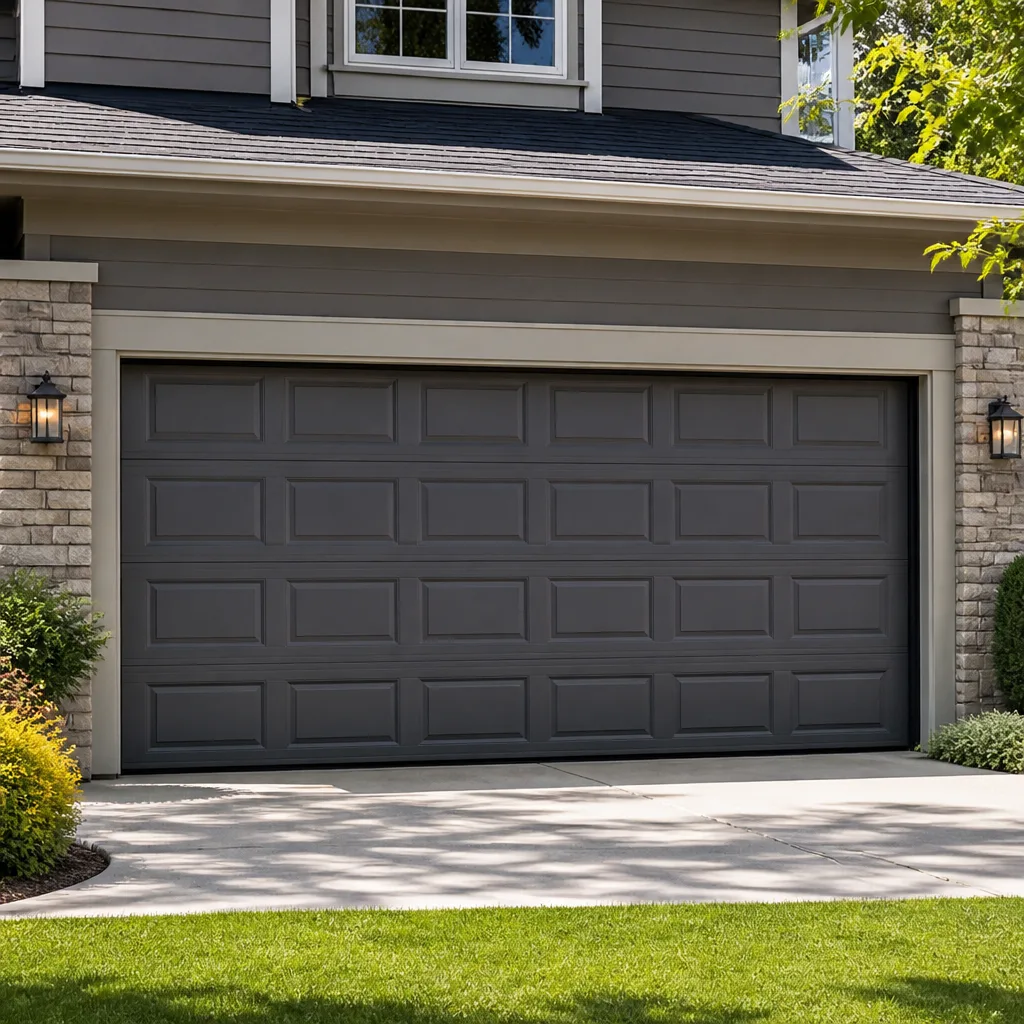 Raised-panel steel
 Carriage house
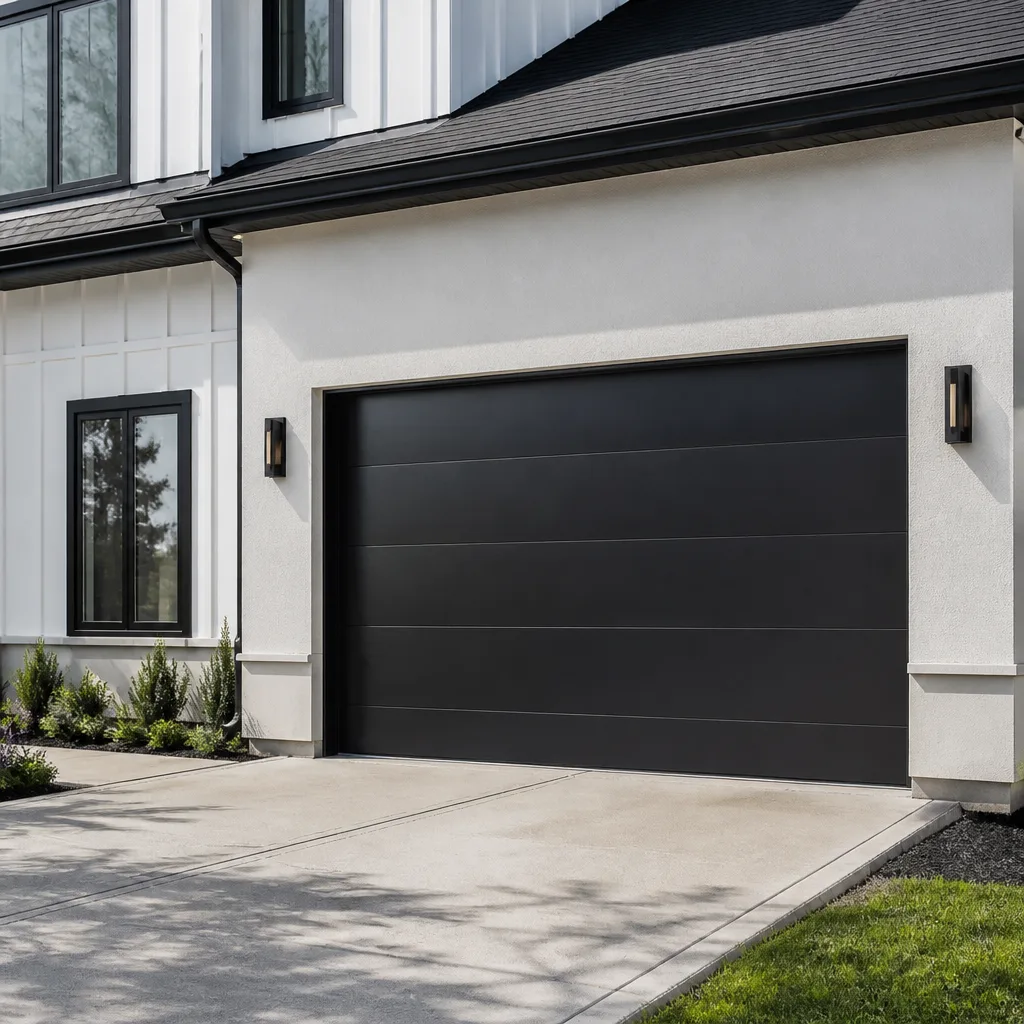 Modern flush
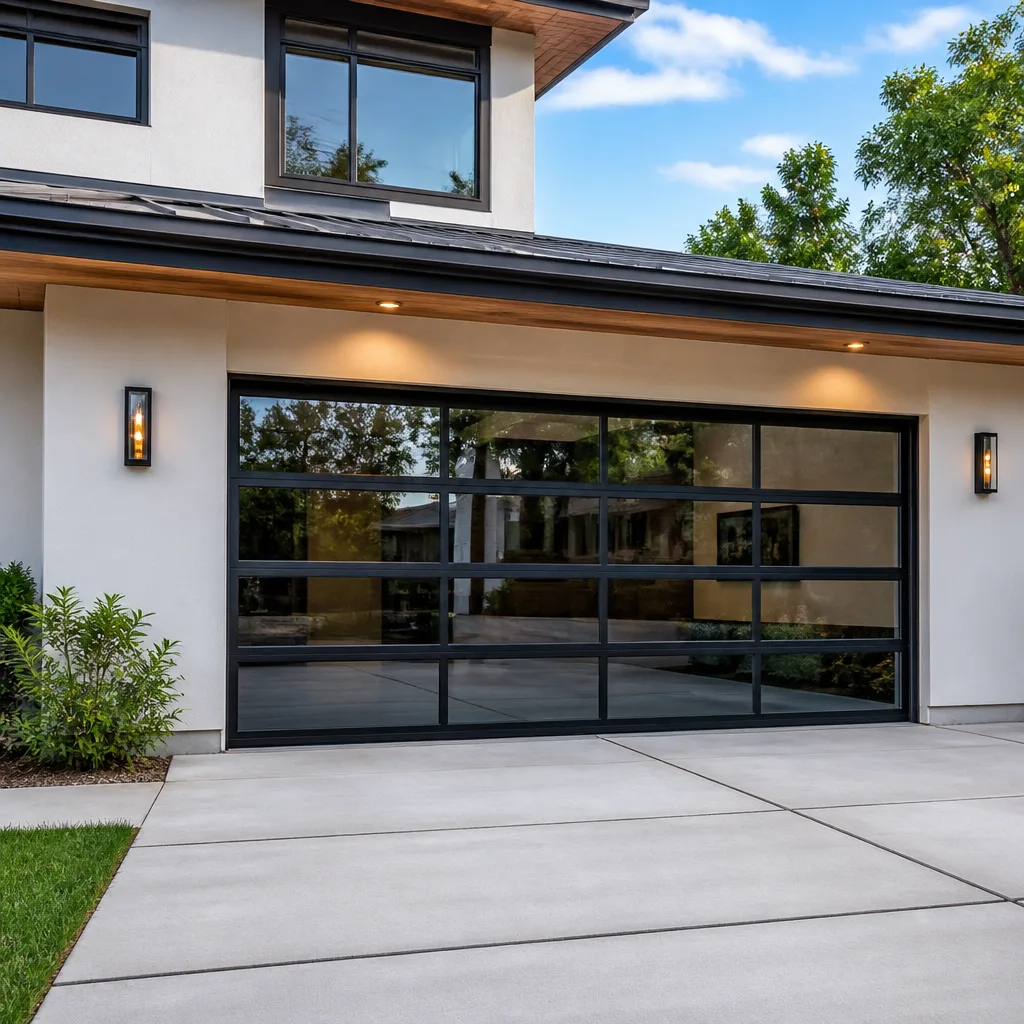 Full-view glass
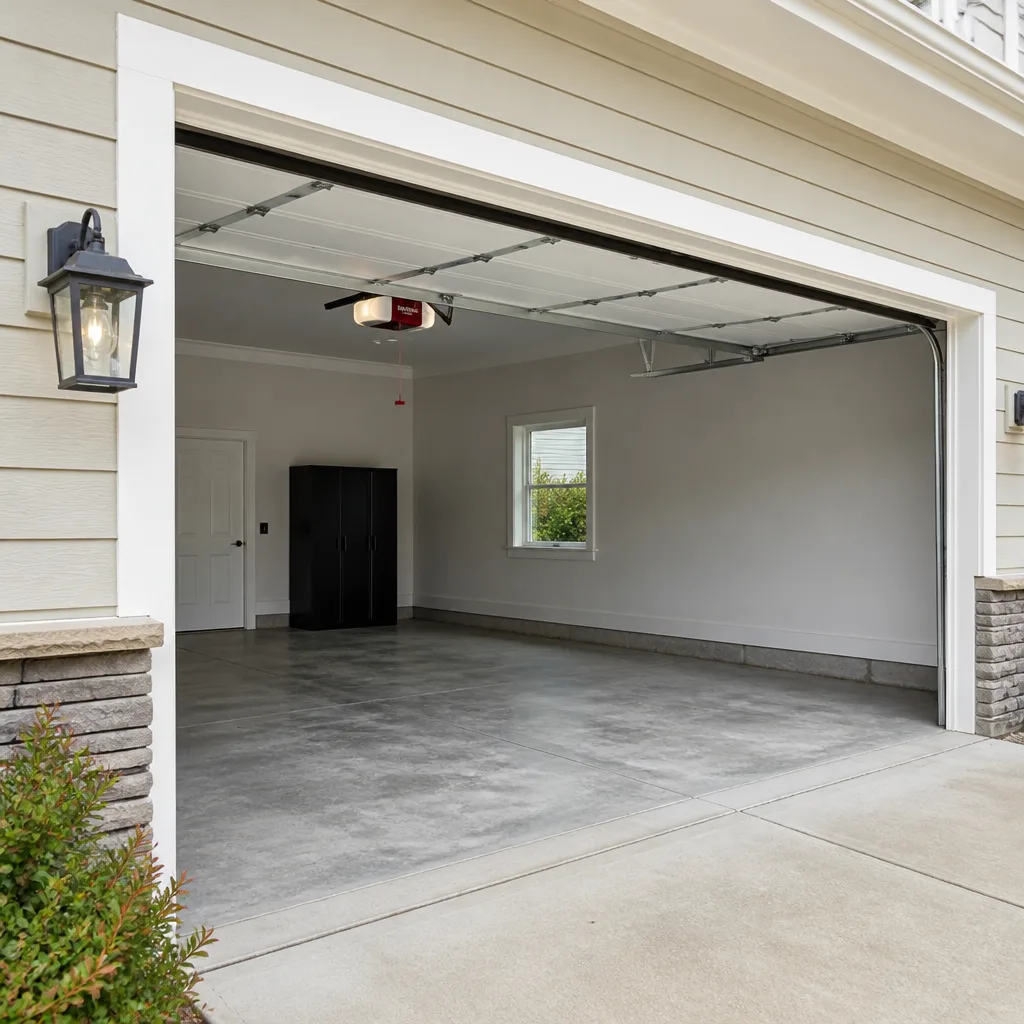 LiftMaster openers
 Chamberlain openers
Full 25-point door and opener safety check with every visit - springs, cables, rollers, tracks, and your LiftMaster or Chamberlain opener included
You get a price before we start. It does not change when the pro arrives.
Get your free estimateGarage Door Warning Signs: A Sunrise Homeowner’s Reference Guide
There’s a difference between a grinding noise that means a roller needs lubrication and a grinding noise that means a cable is about to snap under tension. Getting that wrong doesn’t just delay a repair. It’s a safety decision. Most warning-sign lists stop at “loud noises” and “slow movement,” which tells a Sunrise homeowner almost nothing about what’s actually failing. This reference guide takes the opposite approach. We break down what each sound points to, what each visual cue means, how to run a balance test that tells you something useful about your springs, and which signs mean shut the door down now versus which ones can wait a week. You’ll finish with enough vocabulary to describe your problem accurately before you ever pick up the phone.
Quick Answer
Garage door warning signs fall into three groups: sounds (squealing, grinding, popping, rattling, banging), visual cues (rust patterns, sagging panels, frayed cables, worn rollers), and movement problems (jerky travel, reversal, failure to stay balanced halfway open). Popping from the torsion bar, frayed cables, or a door that slams shut are emergency shutdown signs. Squealing rollers and cosmetic surface rust are monitor-and-schedule issues. When in doubt, stop using the door and call a specialist.
Styles & brands we work with
- Raised-panel steel
- Carriage house
- Modern flush
- Full-view glass
- LiftMaster openers
- Chamberlain openers
Table of Contents
- Sound-by-Sound Breakdown: What Each Noise Tells You
- Visual Warning Signs Specific to Sunrise, FL
- How to Run a Balance Test and Read the Result
- Warning Signs That Require Immediate Shutdown
- Signs You Can Monitor for a Week
- Opener Warning Signs by Brand Behavior
- Humidity, Heat, and South Florida Wear Patterns
Sound-by-Sound Breakdown: What Each Noise Tells You
Sounds are the most-reported warning sign and the least understood. Two doors can make noises that sound identical through a wall and have completely different mechanical causes. Here’s how we separate them.
Squealing
A high-pitched squeal that tracks with the door’s movement usually points to dry or worn rollers, a dry hinge, or a torsion spring that’s lost its lubrication. Squealing is rarely urgent. It’s friction asking for attention. If the squeal is only at one end of the door’s travel, look at the rollers on that side first.
Grinding
Grinding is the sound of metal on metal or a bearing that’s failing. If it comes from overhead near the spring, suspect the torsion tube bushings. If it comes from the opener rail, the carriage or a bent rail section is the likely cause. Grinding near the tracks often means a roller has seized and is being dragged rather than rolled. This one deserves a professional look rather than a can of lubricant.
Popping
A single loud pop, or a series of pops, at the torsion bar is the sound of a spring shifting on the bar or a plate coming loose. Popping from the panels usually means hinges or a bent section. Popping from the spring assembly is a shutdown sign because the torsion spring is under constant tension and a failure releases stored energy all at once.
Rattling
Rattling during travel is loose hardware. Hinge bolts, roller stems, the opener’s hanging bracket, or the track brackets have loosened. It’s not dangerous on its own, but loose hardware accelerates wear on everything it touches.
Banging
Banging when the door reaches the floor or the top of travel means the travel limits on your opener are set wrong, or a spring has lost tension and the door is descending under its own weight. A door that bangs on closing is a door that’s no longer being counterbalanced. That’s a balance problem, covered below.
- Squealing – lubrication or worn rollers; schedule it
- Grinding – bearing, bushing, or seized roller; book a service call
- Popping at the spring – shutdown now, call immediately
- Rattling – loose hardware; tighten or have it looked at
- Banging on close – spring tension loss or bad limits; diagnose the balance
Visual Warning Signs Specific to Sunrise, FL
Sunrise sits in a humid, warm climate, and that environment drives specific wear patterns on garage door hardware. If you moved here from a drier part of the country, the rust you see on your springs may look alarming and mean very little, or the opposite. Here’s how to tell them apart.
Surface Rust vs. Structural Rust
Surface oxidation is a thin, uniform orange-brown film on the outside of the spring coil. Wipe it with a rag and it stays on the rag. That’s cosmetic and mostly reflects humidity exposure. Structural rust is different: it shows as flaking, pitting, or a rough crusted texture, often concentrated on one section of the coil rather than evenly spread. Pitting can indicate a coil is thinning. If you can see pitting, scheduling a professional inspection is the right move; if you can only see even orange film, keep an eye on it.
Panel Sagging and Delamination
Wood-composite and hardboard panels don’t love sustained humidity. Look for wavy sections, panel edges that have separated from their frames, and daylight showing through gaps between panels. Once delamination starts, it progresses, so panels are worth inspecting each season.
Track and Roller Cues
Rust on the tracks themselves slows the rollers and wears them out faster. A steel roller with a flat spot or visible bearing play is a roller that needs replacement. Nylon rollers handle humidity better than steel in a Sunrise, FL garage.
Cable Fraying and Spring Coil Gaps
A frayed cable shows as broken wire strands near the drum. Even a few broken strands means the cable is compromised. On springs, look for a gap in the coil that wasn’t there before – a stretched section means the spring is losing its holding power.
How to Run a Balance Test and Read the Result
The balance test is the single most useful diagnostic you can run safely. It tells you whether your garage door’s springs are doing their job. An unbalanced door is an unsafe door, because the opener is now carrying a weight it wasn’t designed to lift alone. Do this with the door disconnected from the opener and the door closed.
- Pull the manual release cord so the door is disconnected from the opener carriage.
- Lift the door by hand to roughly waist height. It should move with modest, even effort.
- Stop lifting and let go. The door should stay exactly where you left it.
- If it drifts down, the springs are weak. If it rises on its own, the springs are over-tensioned or the door is too light for the spring setting.
- If it drops fast or slams, the springs have failed or the cables are compromised. Do not re-engage the opener; call a specialist.
An unbalanced door makes the opener labor, which shortens the opener’s motor life and stresses the door hardware. A balance failure is often the earliest signal that a spring is on its way out, and it’s the reason a proactively scheduled garage door spring repair is preferable to an emergency call.
Warning Signs That Require Immediate Shutdown
Some warning signs mean “stop using the door right now.” The reason is simple: the torsion spring, cables, and drums store and transfer force capable of seriously injuring anyone nearby if a component lets go. If you see any of the following, disconnect the opener (if safe to do so without standing under the door), leave the door closed, and call a professional.
- A visible break in the torsion spring – a gap in the coil with the door unable to lift properly
- Frayed or broken cables – even a few broken strands near the drum
- A door that won’t stay up when you let go during the balance test – spring failure
- Popping or banging coming from the torsion bar
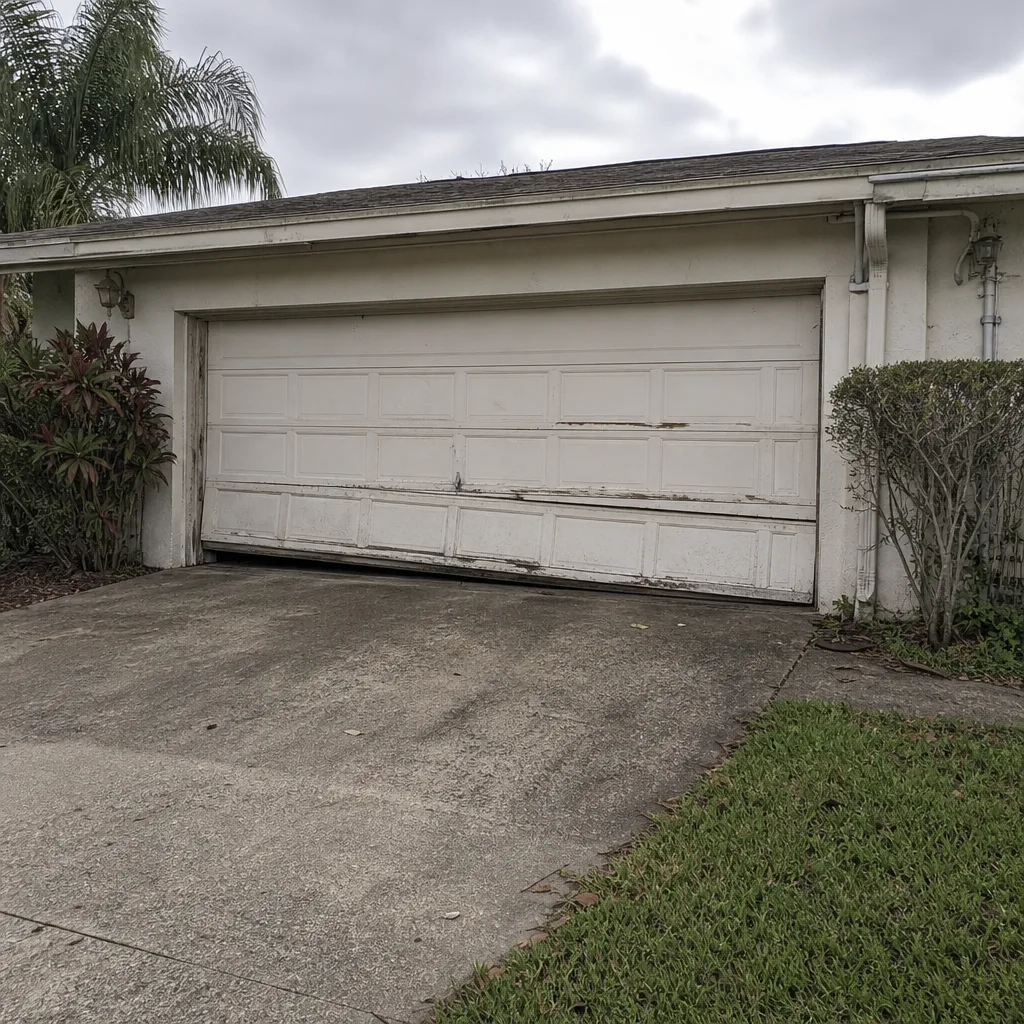
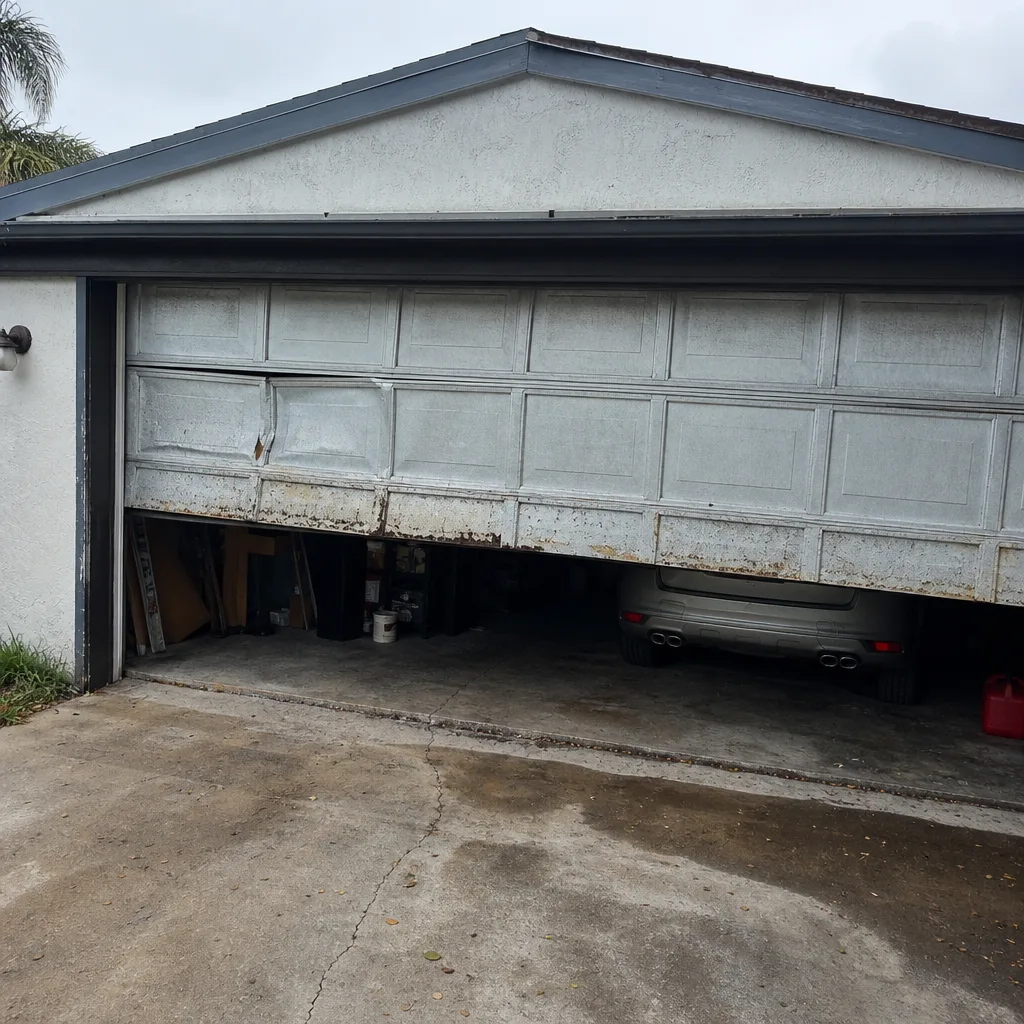
- A door hanging crooked with one side lower than the other – cable or spring failure on that side
- Panels that have bent free of their hinge points – the door is structurally compromised
- A door that has come off one of its tracks – never force it back on
For any of these, an emergency garage door service call is warranted. We provide Sunrise Garage Door Repair Pros emergency response for exactly these situations, with fast dispatch from 7am to 7pm.
Signs You Can Monitor for a Week
Not every warning sign is a shutdown. Many are “schedule it soon” signals, and knowing which is which keeps you from either panicking over cosmetic issues or ignoring a real problem. The following can generally be watched for a week without a meaningful safety risk:
- Squealing rollers or hinges – friction, not failure; lubricate and watch
- Rattling hardware – tighten the bolts and listen for improvement
- Cosmetic surface rust on springs – even orange film is a monitor issue
- A door that pauses briefly at one point in travel – may be a dry roller or a minor track bend
- An opener light that flickers or an occasional remote miss – electronics, not mechanics
Use that week to book a proper diagnostic. A small repair now is a much shorter appointment than a broken spring or a snapped cable later. If you need an exact quote, our garage door repair team will inspect and give you a written estimate before any work starts.
Opener Warning Signs by Brand Behavior
Openers from different manufacturers signal failure in different ways. If you can tell us the brand and what the light or reversal behavior is doing, we can often narrow the problem down before we arrive. It’s also why we’re trained across Raynor, LiftMaster, Chamberlain, and Genie, along with the other major brands.
Chamberlain and LiftMaster
These two share much of their internal logic. A common cue is the opener light flashing a specific number of times when the door reverses – each flash count corresponds to a diagnostic condition, such as an obstruction, a sensor fault, or a travel-limit problem. If your door reverses quickly right after closing, the safety sensors are the first thing to check. A remote that’s gradually lost range often points to a failing logic board or a dying battery rather than the opener itself.
Genie
Genie openers tend to run quieter but lighter-duty, which means they’re less forgiving of an unbalanced door. A Genie model that starts stalling halfway up is often telling you the spring tension is weak rather than that the motor is dying. Reversal at the very bottom of travel points toward the sensor eyes or the down-travel limit.
Raynor
Raynor openers are known for a more mechanical feel and a firm reversal stop. If a Raynor opener reverses without any visible obstruction, check the sensors first, then the travel limits. A remote that requires repeated presses is usually a battery or programming issue.
Any opener brand that starts shorting its travel cycles, reversing without cause, or failing to respond is a candidate for garage door opener repair rather than replacement. Our technicians diagnose the opener you already have and repair it wherever possible.
Humidity, Heat, and South Florida Wear Patterns
Sunrise’s humid, warm climate accelerates certain failure modes and slows others. Understanding which is which makes a difference in how often you inspect.
Rubber and plastic parts wear faster here than in drier climates. Roller bearings, hinge bushings, and the rubber seal at the bottom of the door all take a beating from sustained humidity. Steel components – springs, tracks, cables – are more prone to surface oxidation, though not usually structural rust. The gap between “surface oxidation” and “actual failure” is exactly what we described earlier in the visual section. The best habit is a two-minute seasonal inspection: listen for new sounds, check the springs for even rust and any coil gap, look at the cable strands, and run the balance test. If something looks off, call. Sunrise, FL homeowners don’t need to memorize the entire guide; they just need to know when “looks off” has crossed from cosmetic into structural.
Common Mistakes to Avoid
- Lubricating a failing spring. Lubricant quiets a noise, it doesn’t restore tension. If a spring is losing its grip, oil just hides the symptom and buys you time until the failure.
- Assuming slow movement means a bad opener. Nine times out of ten, a sluggish door is a balance problem, not an opener problem. Diagnose the springs before you replace the motor.
- Forcing a door back onto its track. A door that has left its track is under load and can swing violently. Leave it and call a specialist.
- Re-engaging the opener after a balance failure. The opener will labor and can strip its gear. Disconnect and call before you use the door again.
- Ignoring a small crack in a cable. Cables fail fast once they start to fray. A few broken strands is a schedule-it-now, not a schedule-it-later.
- Treating cosmetic rust and structural rust as the same thing. In Sunrise’s humidity, surface oxidation is common and mostly cosmetic. Pitting and flaking are not. Learn the difference and you’ll avoid a wasted service call.
- Replacing a door before it’s actually failing. A noisy, quirky door that still passes a balance test usually needs repair, not replacement. Repair-first keeps the door you own.
See the difference
 Before
 After
 Before
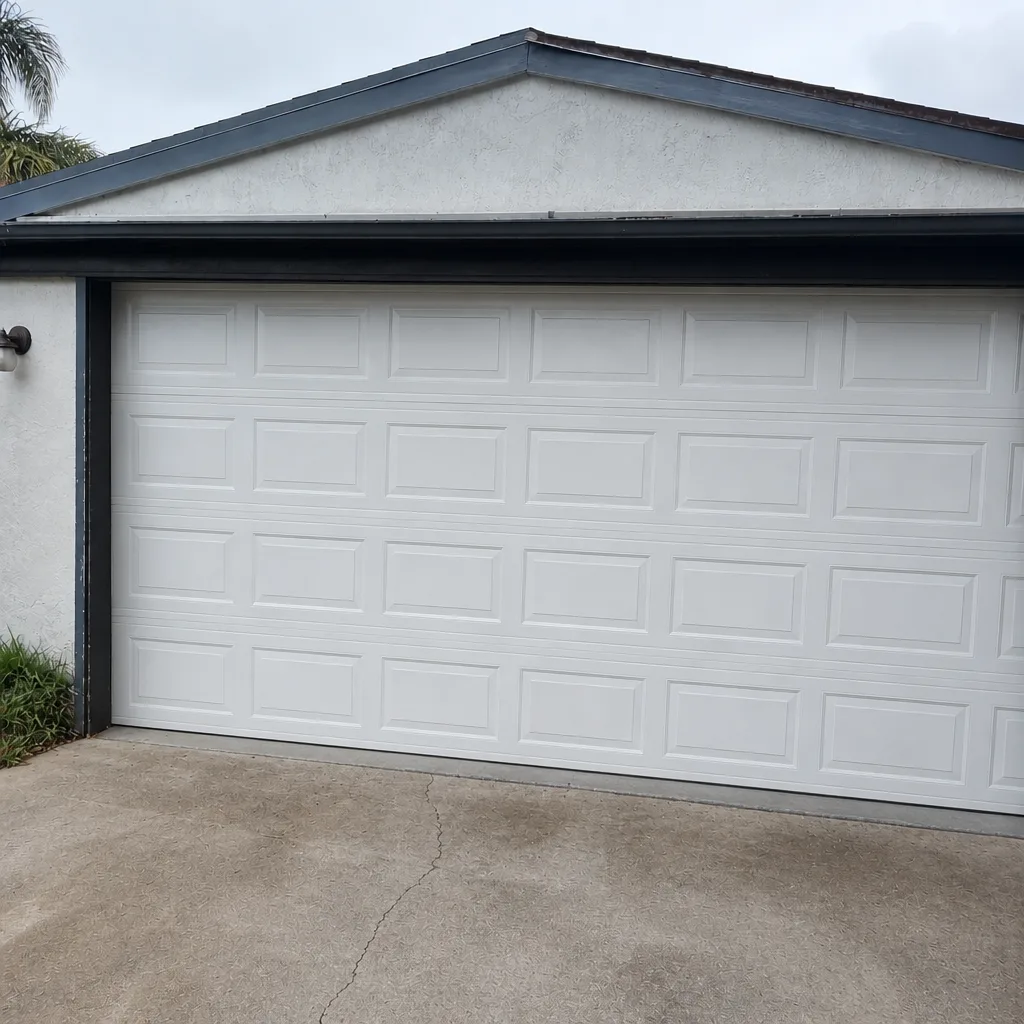 After
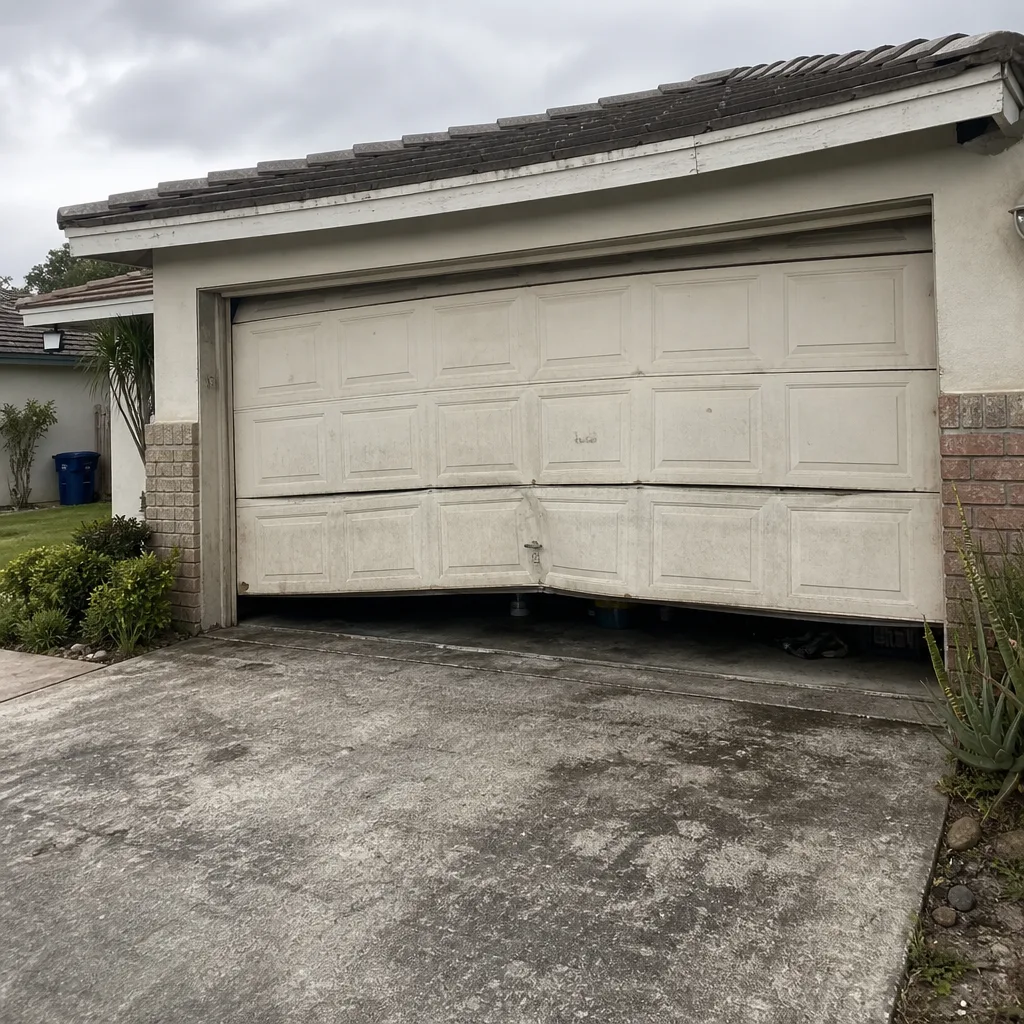 Before
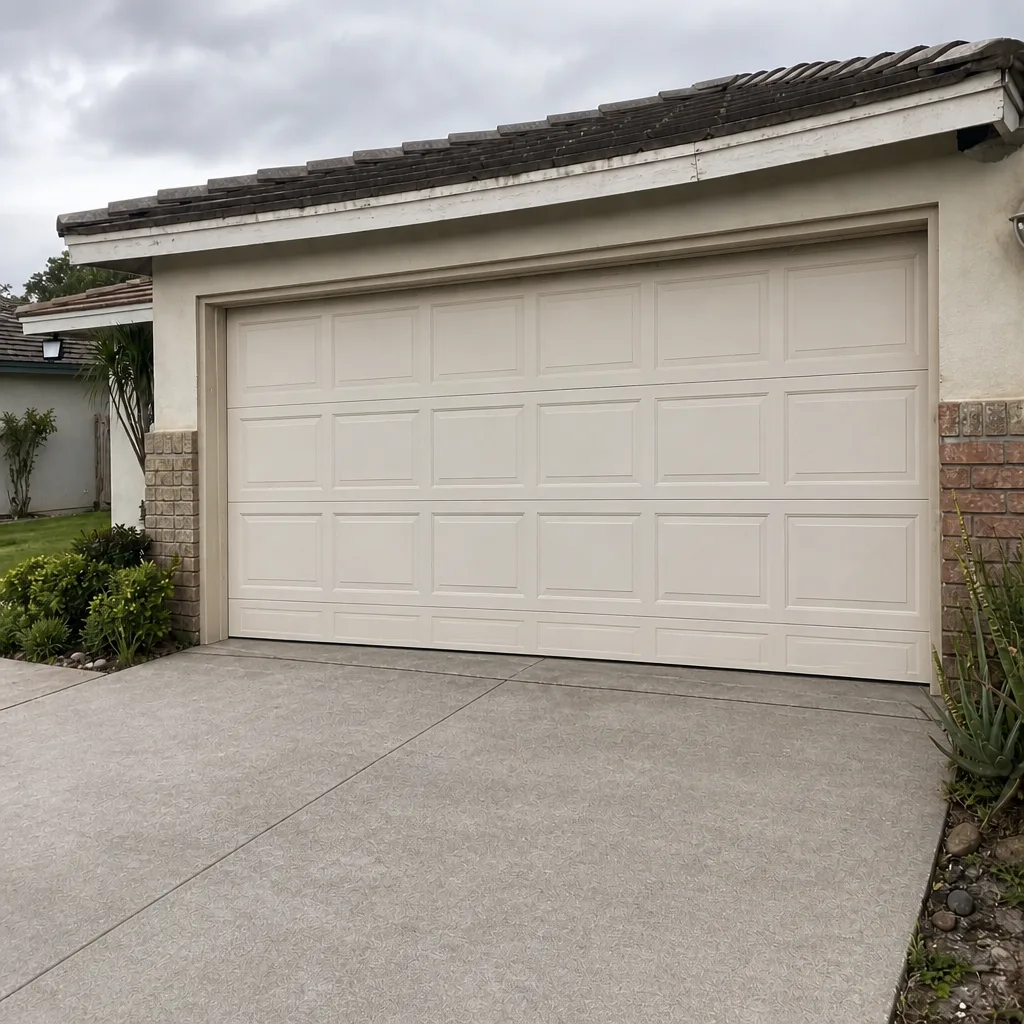 After
When to Call a Professional
Call a professional when any shutdown sign appears, when a balance test fails, when you see frayed cables or coil gaps, or when a door has come off its track. Call when an opener reverses without cause, when the door stalls partway through travel, or when a sound changes from squealing to grinding. Call when cosmetic rust starts to pit. And call if you simply don’t know what you’re hearing – a technician can diagnose in minutes what takes a homeowner weeks to guess. Sunrise Garage Door Repair Pros offers free estimates in Sunrise, and our technicians can tell you whether you need a repair or a replacement. We work on LiftMaster, Chamberlain, Genie, Clopay, Amarr, Wayne Dalton, Craftsman, and Raynor equipment, so we’re equipped to diagnose the door and opener you already own. Call us at (855) 658-4060 for a free estimate.
Frequently Asked Questions
A visible break in the torsion spring, frayed cables, or a door that falls when you release it during a balance test are all emergency shutdown signs. These mean the door’s counterbalance system has failed and the opener is carrying load it wasn’t built for. Stop using the door and call a trained technician. Springs and cables are under high tension and can cause serious injury if handled without proper tools and training.
Squealing is usually not dangerous. It’s the sound of friction between dry rollers, hinges, or springs. It’s a service sign, not a shutdown sign. In our humid climate, squealing tends to show up faster than in drier areas. Have it lubricated professionally and the noise usually stops.
Surface oxidation that wipes off on a rag is cosmetic and common in Sunrise’s humidity. Pitting, flaking, or a rough crust concentrated on part of the coil is structural and worth a professional inspection. If the door also fails a balance test, the rust is a secondary concern to the spring failure itself.
A single broken spring can be replaced on its own, but most torsion systems use a matched pair, and if one spring has failed the second usually isn’t far behind. Most pros recommend replacing the pair so both sides are carrying equal tension. A written estimate will spell out whether your door uses a single spring or a pair.
A door that reverses immediately on floor contact is usually indicating a travel-limit or safety-sensor issue, not a spring problem. On Chamberlain and LiftMaster units, check the sensor eyes first, then the down-travel limit. On Genie and Raynor units, the same sensors are the first suspect. If the sensors check out and the door still reverses, it’s time for a technician.
A handyman can tighten a hinge or wipe down a track. But once the issue involves springs, cables, drums, or a door off its track, you’re in high-tension territory and need a specialist. Springs are the most dangerous part of your garage door system, so leave them to a trained technician. Our technicians have up to 9 years of experience on high-tension hardware, and we can diagnose the door and opener you already own.
The Bottom Line
Warning signs aren’t vague. They’re specific, and they point to specific components. Squealing is friction, grinding is a bearing, popping at the spring is a shutdown, rattling is loose hardware, and banging on close is a spring tension loss. Rust is either cosmetic or structural, and the difference matters. A balance test is the fastest way to tell whether your springs are holding. Shutdown signs come down to one question: is the door under load it can no longer safely carry? When the answer is unclear, stop using the door and call. The earlier you diagnose, the smaller the repair. And if you want a specific answer on your own door, the distance between a guess and a written estimate is one phone call.
Call Sunrise Garage Door Repair Pros at (855) 658-4060 for a free estimate. We work the door and opener you already have, from opener remote to torsion spring to full installation, and we’ll give you an upfront price before any work starts. When your door won’t move, we will.
Written by the team at Sunrise Garage Door Repair Pros.