Last updated November 23, 2026
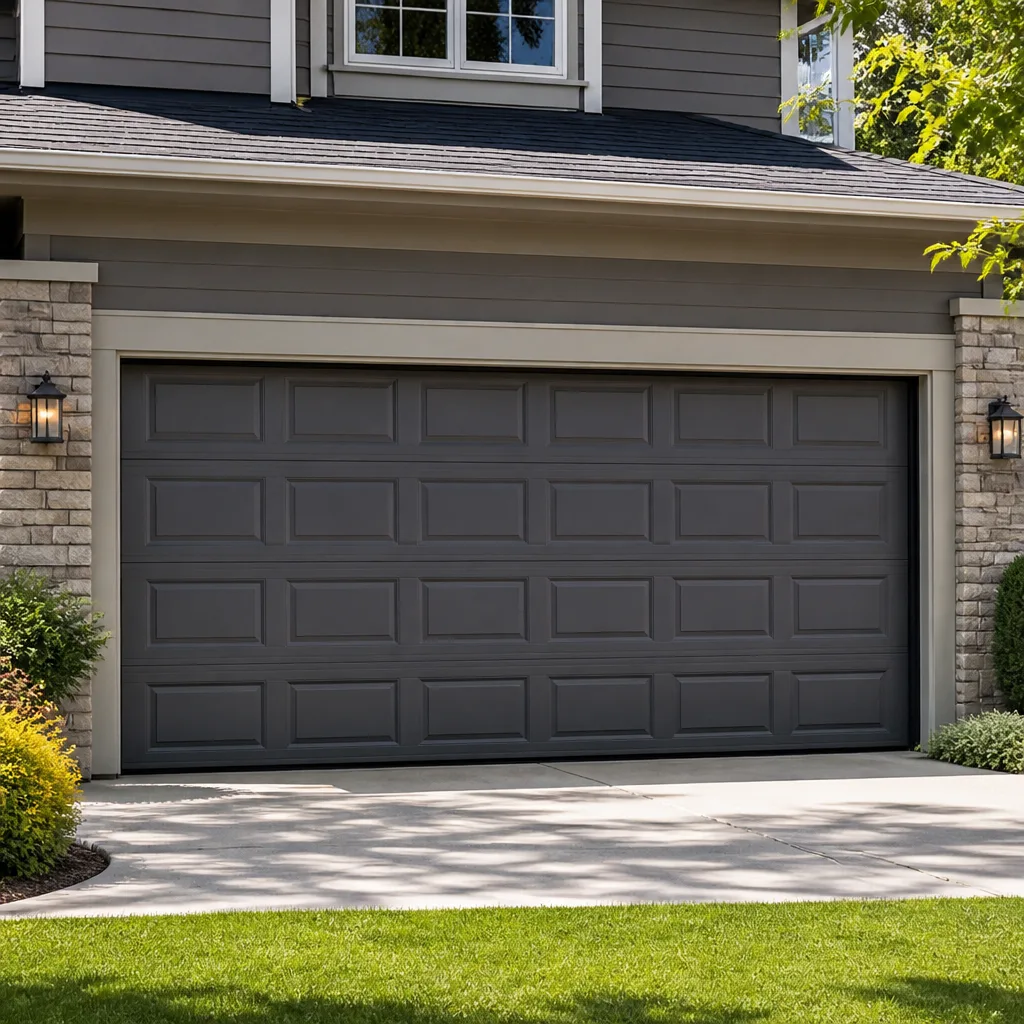 Raised-panel steel
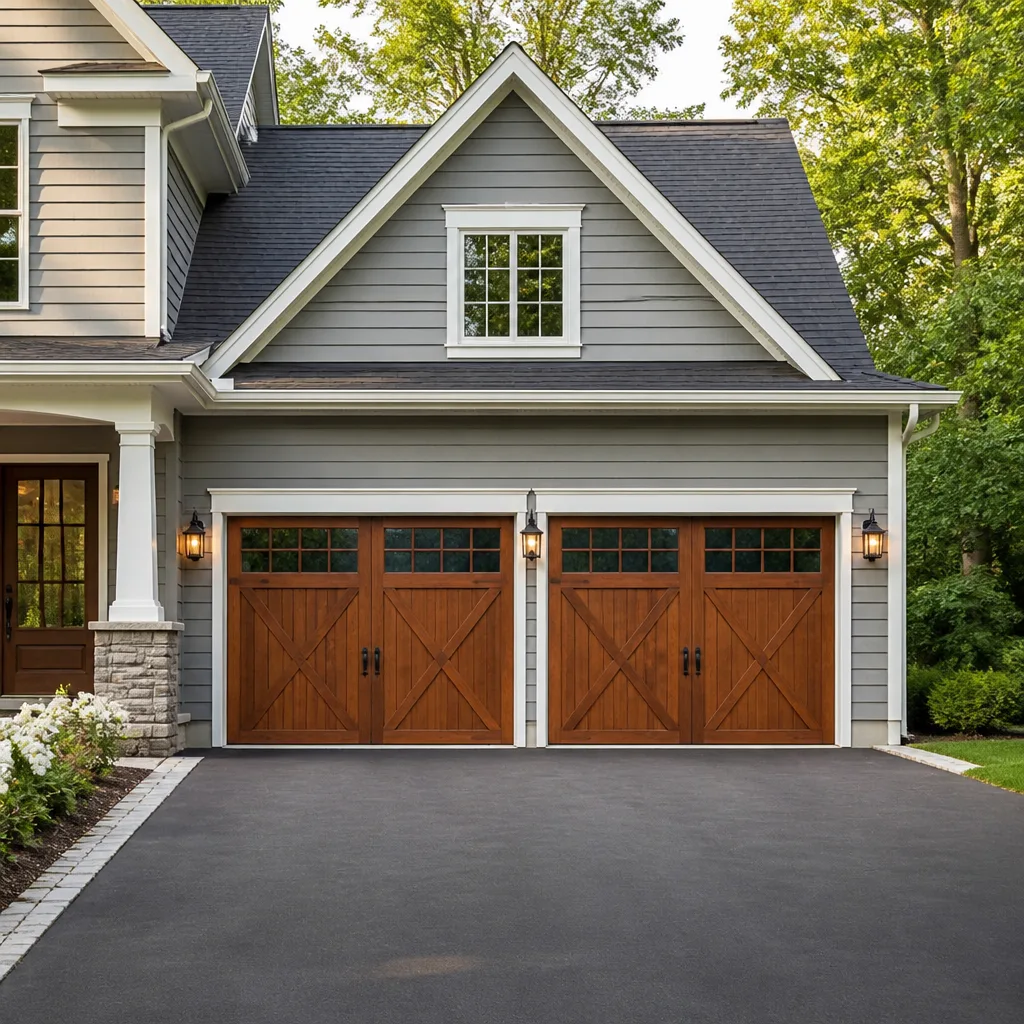 Carriage house
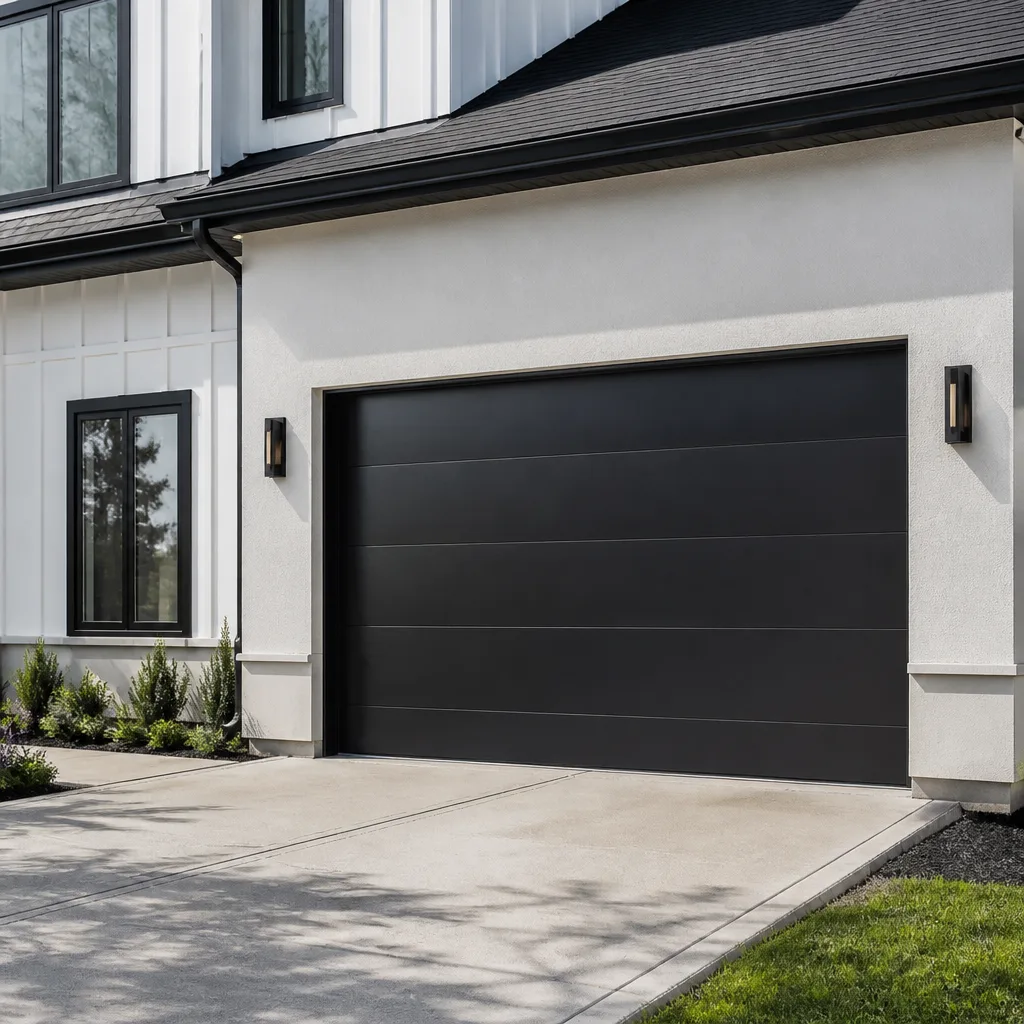 Modern flush
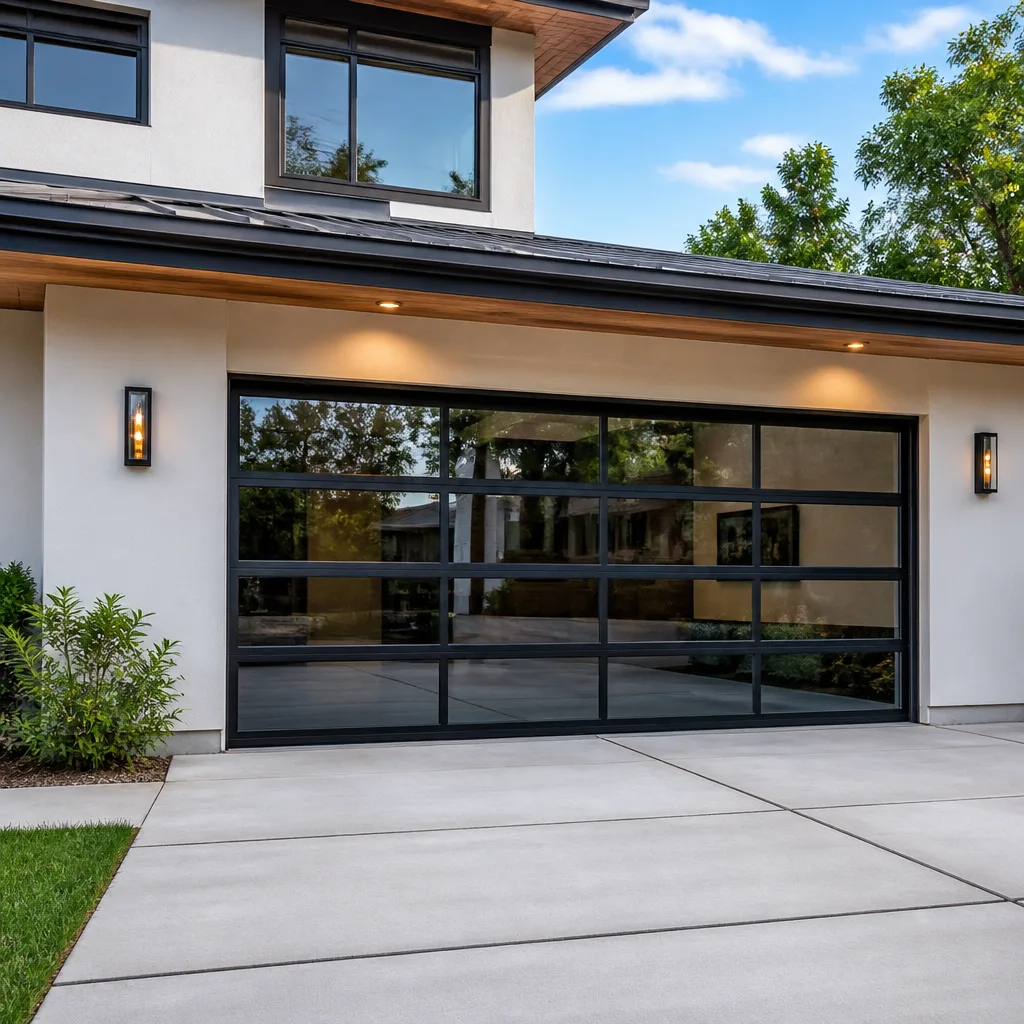 Full-view glass
 LiftMaster openers
 Chamberlain openers
Full 25-point door and opener safety check with every visit - springs, cables, rollers, tracks, and your LiftMaster or Chamberlain opener included
You get a price before we start. It does not change when the pro arrives.
Get your free estimateThe Complete Guide to Garage Doors in Sunrise
Most garage door guides are written for Ohio winters and Minnesota frost. They’ll tell you to watch for ice dams, road salt damage, and freeze-thaw cycles that crack concrete and warp panels. None of that applies here. Sunrise sits about 12 miles from the Atlantic, averages around 60 inches of rain per year, and falls inside a wind-borne debris region that dictates what kind of door you’re allowed to install. That changes almost everything – the springs that fail, the panels that corrode, the styles your HOA will approve, and the math on whether an insulated door is worth the upgrade. This guide covers what actually matters for a garage door in Sunrise, Florida, and skips the advice written for a climate that isn’t yours.
Quick Answer
A garage door in Sunrise needs three things a generic guide won’t mention: corrosion-resistant hardware to survive humid, salt-influenced air; a wind-load-rated door that meets Broward County’s high-velocity hurricane zone requirements; and a style your HOA will approve without a fight. Get those three right and the door lasts decades. Get them wrong and you’ll be replacing springs, cables, and panels on a much shorter cycle than a homeowner in a dry inland climate would ever face.
Styles & brands we work with
- Raised-panel steel
- Carriage house
- Modern flush
- Full-view glass
- LiftMaster openers
- Chamberlain openers
Table of Contents
- Why Sunrise’s Climate Is Harder on Garage Doors Than You Think
- What “Hurricane Rated” Actually Means on a Garage Door Spec Sheet
- HOA Rules in Sunrise Communities and How to Stay Compliant
- The Insulated Door Math in a Warm Climate
- Brands and Hardware That Hold Up in South Florida
- Springs and Cables: The Part Most Homeowners Get Wrong
- A Maintenance Routine That Fits This Climate
- Repair or Replace? A Decision Framework
Why Sunrise’s Climate Is Harder on Garage Doors Than You Think
Garage door systems here don’t fail from cold. They fail from moisture, heat, and airborne salt carried by onshore breezes. The average annual rainfall in this part of Broward County is roughly 60 inches, and a lot of it arrives in concentrated bursts during the summer wet season. Every time the humidity swings from 90 percent to 65 percent and back, metal parts expand and contract. The cheap, thin-gauge hardware that ships on builder-grade doors handles that cycling poorly.
Springs are the first casualty. A torsion spring is a wound piece of steel under enormous tension. Corrosion on the wire’s surface creates stress points, and a spring can lose years off its working life in a coastal-influenced climate compared to an inland home. Cables fare similarly – the stranded steel picks up surface rust, then fraying, then a snap that lets the door come down hard. We’ve seen cables that would last 15 years in a dry climate give out in a fraction of that when they’re never inspected or lubricated.
What the humidity actually attacks
- Spring wire and cable strands – surface corrosion creates weak points and accelerates fatigue.
- Hinges and rollers – steel rollers corrode and seize; nylon rollers survive much better.
- Bottom seals and weatherstripping – heat and humidity break down rubber faster than cold does, letting water and pests in.
- Paint and finish on steel doors – sun exposure on the west-facing side of a home will fade and chalk a finish over time, especially on cheaper doors.
The good news is that a routine inspection catches most of this. A technician who knows what humidity does to Springs in Sunrise can tell you in a few minutes whether a component has years left or months left. That’s not upselling – it’s the difference between a planned replacement and an emergency call when the door won’t lift.
What “Hurricane Rated” Actually Means on a Garage Door Spec Sheet
If you buy a replacement door in Sunrise, it has to meet the wind-load requirements that apply to Broward County’s high-velocity hurricane zone. This is not a marketing feature you can skip. Look at any door brochure, and you’ll see a spec that lists design pressure (DP) ratings tied to opening size and wind speed. What that number really means is this: the door, its track, its hinges, its rollers, and its reinforcing struts were engineered and tested as a system to resist a specific wind load without the panels buckling or the door blowing in.
Reading a spec sheet without getting lost
- Find the design pressure rating. It looks like “DP +50” or similar. That number is tied to a maximum wind speed and a door size. A bigger door needs a higher rating for the same wind.
- Check the impact rating. For openings that require impact protection, the door needs to resist wind-borne debris, not just pressure. Not every door in a line carries that rating.
- Confirm the installation matches the certification. A wind-rated door bolted to standard anchors in a weak jamb won’t perform as tested. The fastening pattern and reinforcement struts matter as much as the door.
- Ask for the documentation. A legitimate supplier provides the evaluation or test report for the exact model and size. No paperwork means no verified rating.
Here’s the part homeowners miss: a hurricane-rated door is a system, not a panel. Track, jamb brackets, and anchor spacing all pull their weight. If a bottom section gets dented in a storm and you swap in a non-rated replacement panel, you’ve quietly downgraded the whole opening. If you’re unsure what your current door is rated for, a professional inspection can usually identify the model and the reinforcement setup. For code specifics on your address, the City of Sunrise building department is the authority – always confirm with them before you install.
When a storm does damage the door or the opener, that’s a repair call, not a replacement call. You can reach us for garage door repair in the aftermath, and we’ll tell you honestly whether the panel can be sourced or the door needs to be replaced.
HOA Rules in Sunrise Communities and How to Stay Compliant
A large share of homes in Sunrise fall under an HOA, and those rules shape the door you can buy. The most common restrictions we run into are paint color and finish, panel style (many communities require a raised-panel look and reject certain carriage-house designs), window placement, and visible hardware. Some boards are lenient. Some will send a violation notice over a visible dent or a slightly off shade of beige.
Getting compliant without sacrificing function is straightforward if you plan ahead. Start by pulling your community’s architectural guidelines and the approved color palette before you shop. Then match the function you want to the style the HOA allows. A wind-rated, insulated door exists in almost every common panel style, so you rarely have to choose between code compliance and getting a door that lasts.
How to get HOA approval without a second round
- Get the architectural guidelines in writing. Not a neighbor’s memory of them – the actual document.
- Photograph the approved colors. Paint codes are more useful than “tan.”
- Ask the manufacturer for a color chip and a style sheet. Most will provide one, and a board is more likely to say yes to a sample than to a website photo.
- Submit the request with the model number and wind rating attached. A complete package gets approved in one pass; a partial one bounces back.
- Keep the approval letter. If a future board member has questions, you have the record.
Communities around Sawgrass and west of the Turnpike tend to have the strictest design guidelines, while some older neighborhoods have fewer. We see the full range of HOA policies in Sunrise and can usually tell you what a board is likely to approve based on the door style. But the final call is always theirs – get approval before anyone orders a door.
The Insulated Door Math in a Warm Climate
Most insulation advice you’ll read online is about keeping cold air out of the garage in winter. In Sunrise, the calculation runs the other direction. An insulated door keeps air-conditioned air from leaking out and blocks radiant heat from pushing in through the door. A garage on the sunny side of a house without insulation can hit temperatures well above outdoor air – and that heat bleeds into whatever’s on the other side of the wall.
Whether insulation pays for itself depends on what the garage touches. If an HVAC duct, a water heater, or a bedroom shares a wall with the garage, an insulated door is almost always worth the upgrade. If the garage is fully detached from living space, the benefit is smaller and mostly shows up as a more comfortable garage and less condensation on stored items.
How to decide whether to go insulated
- Garage attached to living space? Insulate. You’ll notice the difference on hot afternoons.
- HVAC, water heater, or laundry in the garage? Insulate. Equipment works more efficiently in a cooler space.
- Detached or open on two sides? The payback is smaller. Insulation still helps with noise and condensation, but the energy math is closer to a draw.
- Do you use the garage as a workshop or gym? Insulate. You’ll actually want to be out there.
National ROI figures you see for insulated doors don’t map onto South Florida, because they’re calculated for heating-dominated climates. Here, the value is air-conditioning containment and comfort, not winter heat retention. If you’re weighing the upgrade, ask for the insulation R-value on the door you’re considering and compare it against your specific use case. Our team can walk through it on-site during a free estimate.
Brands and Hardware That Hold Up in South Florida
Brand matters less than the specific hardware package inside the door – and in this climate, hardware corrosion resistance is what separates a door that lasts from one that starts failing at year seven. We work on the brand you already have, and we’re certified across eight leading lines: LiftMaster, Chamberlain, Genie, Clopay, Amarr, Wayne Dalton, Craftsman, and Raynor. That breadth means we don’t push a replacement because we only know one brand. We repair the door that’s hanging over your driveway.
What to look for in each component
- Springs: Look for a coated or galvanized spring wire. Standard oil-tempered wire is fine but needs more frequent inspection in this humidity.
- Cables: Galvanized or stainless-steel cable strands outlast plain galvanized by a wide margin in coastal-influenced air.
- Rollers: Nylon rollers with sealed bearings survive humidity far better than steel rollers. This is a cheap upgrade with real life-cycle impact.
- Hinges and brackets: Zinc-plated or stainless fasteners and hinges are common on better doors; on cheaper doors, expect more frequent replacement.
- Door sections: Steel with a factory-baked finish holds up; the quality of the finish matters as much as the gauge of the steel.
In our experience, Clopay and Amarr both offer strong wind-rated and insulated lines that hold up well here, and Wayne Dalton produces some reliable hardware for standard residential doors. Craftsman openers are still common in Sunrise homes and are entirely serviceable – a Craftsman that needs a board or gear replacement doesn’t need to be thrown out. For opener electronics, we handle garage door opener repair across LiftMaster, Chamberlain, Genie, and the rest.
Springs and Cables: The Part Most Homeowners Get Wrong
Torsion springs are the most dangerous component in any garage door system. They store enough energy to lift a door that weighs hundreds of pounds. When a spring fails, the energy releases instantly – and the door drops. This is the one repair we will always tell you not to attempt yourself, no matter how handy you are around the house. A wound torsion spring has no safe margin for error.
The signs of a failing spring are usually obvious before it snaps. The door lifts unevenly or feels heavier than it used to. You hear a loud bang from the garage even when nobody is home. The door opens a few inches and stops. A visible gap in the coil means the spring has already broken. A snapped cable shows as a frayed strand hanging near the track. Any of these call for a technician, not a ladder.
How spring repair works when a trained technician handles it
- Diagnose the failure. Confirm whether it’s the spring, the cable, the drum, or the opener – sometimes two of these fail together.
- Secure the door. Lock the door in place with proper winding bars and clamps so the energy can’t release unexpectedly.
- Measure and match the spring. Springs are sized by wire gauge, inside diameter, and length. A mismatched spring will damage the door and the opener.
- Replace the pair. If one spring broke, both are near the end of their life. Replacing only one spring unbalances the door and shortens the life of the new one.
- Balance, test, and lubricate. After winding, the door should hold itself at the mid-point without drifting, and the opener should run smoothly through a full cycle.
One spring is typically replaced as part of a matched pair, so the pair costs about twice the price of a single spring. For garage door spring repair in Sunrise, we quote the spring, the pair, and any cable work up front, in writing, before we touch the door. There is no surprise invoice later.
A Maintenance Routine That Fits This Climate
A short monthly routine prevents most of the failures we see in Sunrise. Spend ten minutes once a month doing an eyeball inspection – it costs nothing and gives you warning long before something breaks.
Monthly checks you can do safely
- Look at the springs for rust, gaps, or stretching.
- Run the door and listen for grinding, scraping, or a bang.
- Check the photo-eye sensors at the bottom of the track – they should be aligned and clean.
- Test the auto-reverse by placing a small object (like a roll of paper towels) in the door’s path.
- Watch for uneven lifting or a door that sags on one side.
Annual service work (leave the dangerous parts to a technician)
- Lubricate hinges, rollers, and springs. White lithium grease on hinges, on the torsion spring coils, and on the bearing plates extends life noticeably in this climate.
- Inspect and adjust track alignment. Warped or misaligned tracks cause rollers to bind and the opener to work harder.
- Tighten hardware. Vibration loosens bolts; torque everything to spec.
- Replace bottom seals if deteriorated. A cracked seal lets in water, insects, and humid air.
- Test the opener’s force settings. The opener should reverse on contact, and the force should match the door’s weight – not be cranked up to compensate for a dragging door.
Doing those five safe monthly checks yourself keeps the door running well between professional service calls, and it also prepares you to describe the issue accurately if something does break.
Repair or Replace? A Decision Framework
The honest answer depends on age, damage, and how many systems are failing at once. A door at year eight with a snapped spring is a spring repair, not a new door. A door at year 20 with delaminating panels, worn hinges, and a dying opener is usually a replacement. The middle ground – a door that needs three repairs in a year – is where the calculation gets interesting.
When repair is the right call
- The door is under 12-15 years old and the panels are sound.
- One component failed (spring, cable, opener board) and the rest is in good shape.
- The door is wind-rated and code-compliant for your address, so replacing it just to replace it buys you nothing.
- The opener is under 10 years old and the issue is a battery, a sensor, or a remote.
When replacement makes more sense
- Multiple panels are dented, delaminated, or rusted through.
- The door isn’t wind-rated and your insurance or code requires it.
- Repairs would total a big fraction of a new door’s cost.
- You want an insulated or HOA-compliant style you can’t retrofit.
Replacement is scheduled work, not emergency work – it’s measured, ordered, and installed. If you’re in the decision phase, Sunrise Garage Door Repair Pros can come out, take a look, and give you a written estimate on both paths: repair now, and replacement if and when the time comes. For a full new-door install, we measure, quote, and get the door ordered with the correct wind rating for your address.
Common Mistakes to Avoid
- Installing a standard door in a wind-borne debris zone. It won’t pass inspection, and your insurance may not cover storm damage from a non-compliant door. Verify the DP rating and impact certification before your installer orders anything.
- Ordering a door before HOA approval. A rejected color or style means a restocking fee, a delay, and a holiday weekend with a door propped up in your driveway. Get the approval letter first.
- Replacing only one spring. A matched pair wears at the same rate. Replacing one leaves an unbalanced door, which strains the opener and shortens the new spring’s life.
- Overlooking humidity damage to standard steel hardware. Where an inland homeowner might get 15 years out of a plain fastening package, coastal-influenced air can halve that. Pay for the galvanized or stainless option on springs and cables.
- Ignoring a small gap in the bottom seal. Heat and humidity break down rubber seals fast here, and a compromised seal invites water, insects, and humid air into the garage. A new seal is one of the cheapest preventive fixes you can make.
- Trusting an unlicensed “friend of a friend” with a spring repair. The energy in a wound torsion spring can kill or seriously injure someone. Use a professional – the local pro is licensed and insured as their state requires.
- Skipping the insulation question until after the door is ordered. If a duct or a water heater lives in the garage, adding insulation later means re-ordering the door. Decide before the order form.
See the difference
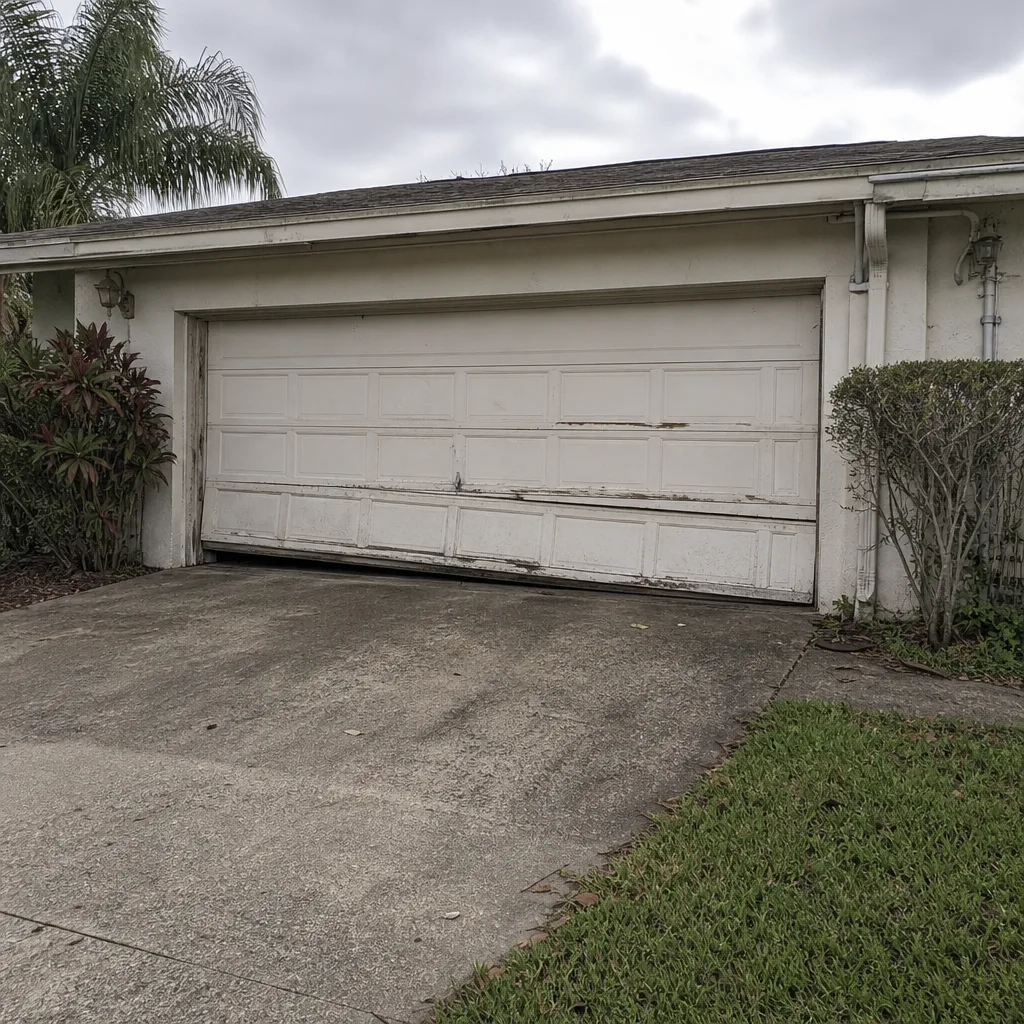 Before
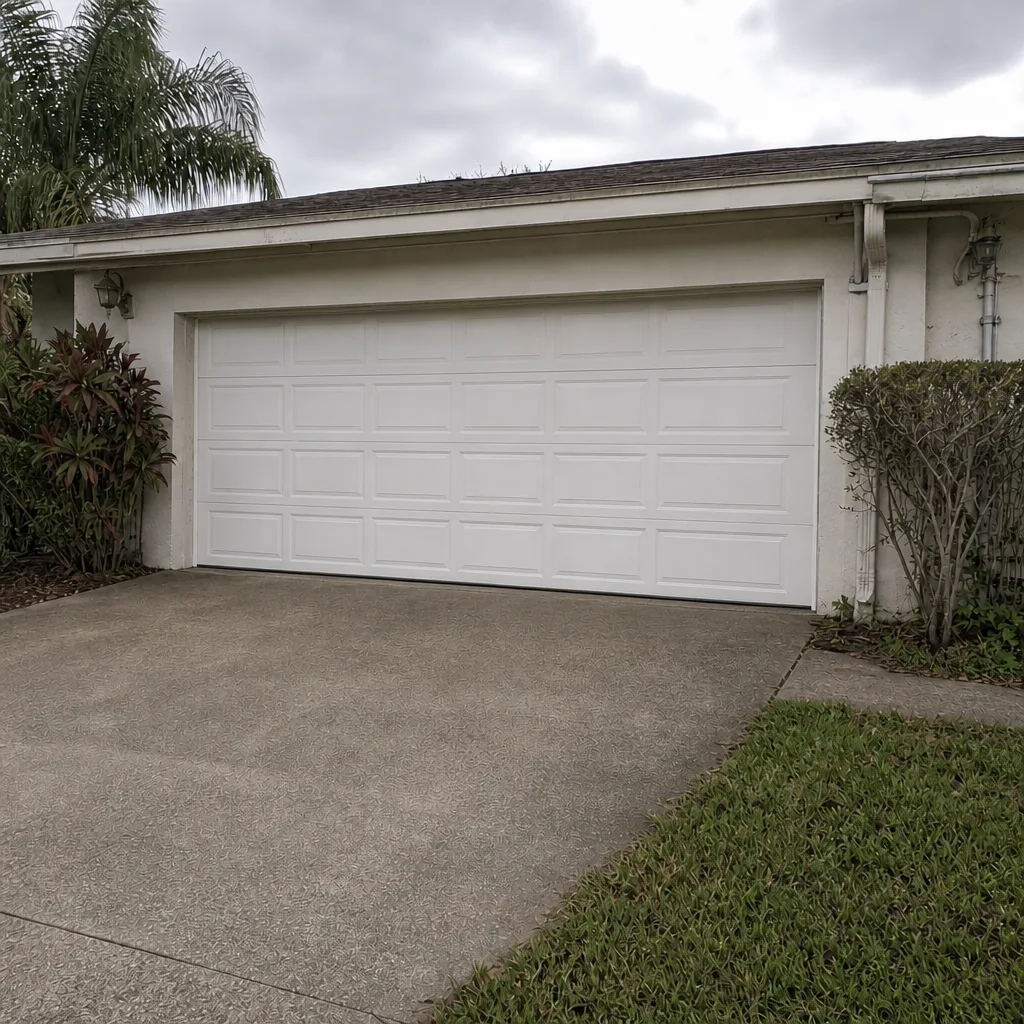 After
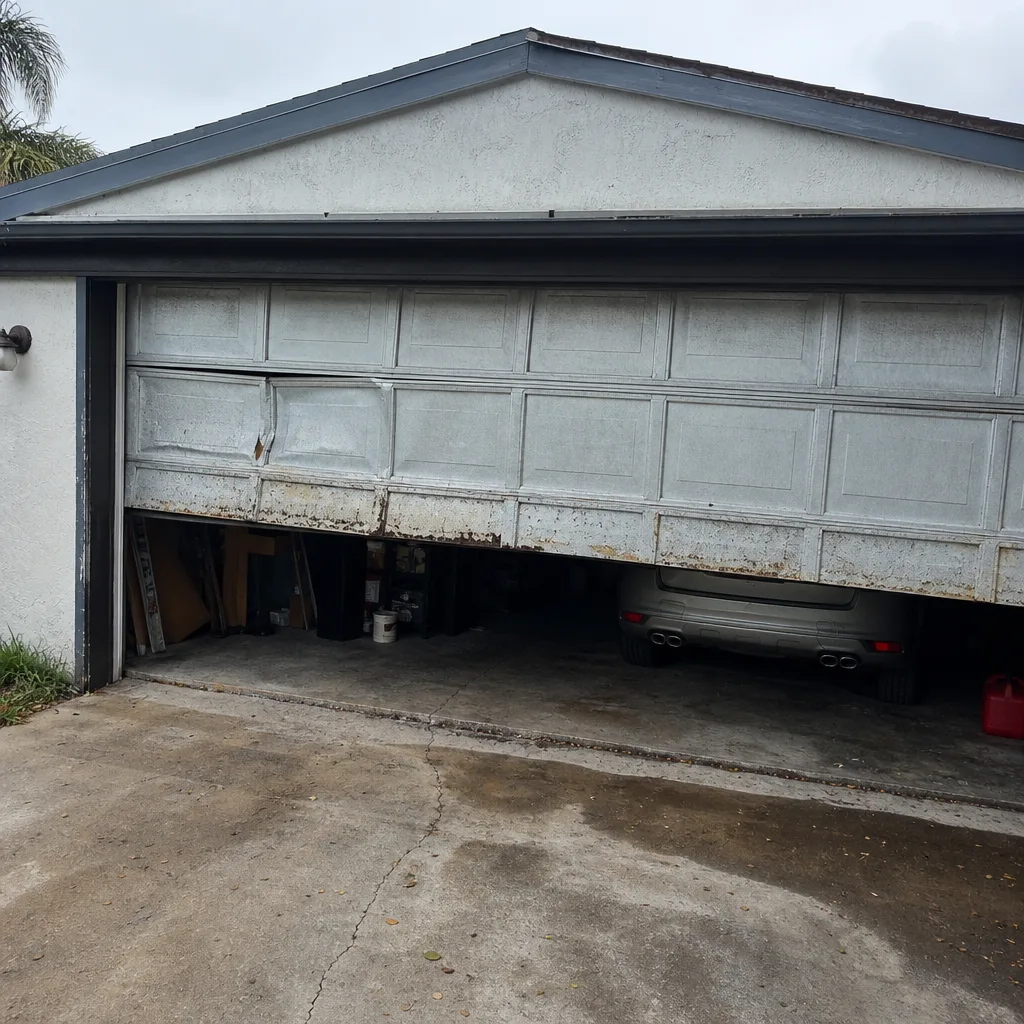 Before
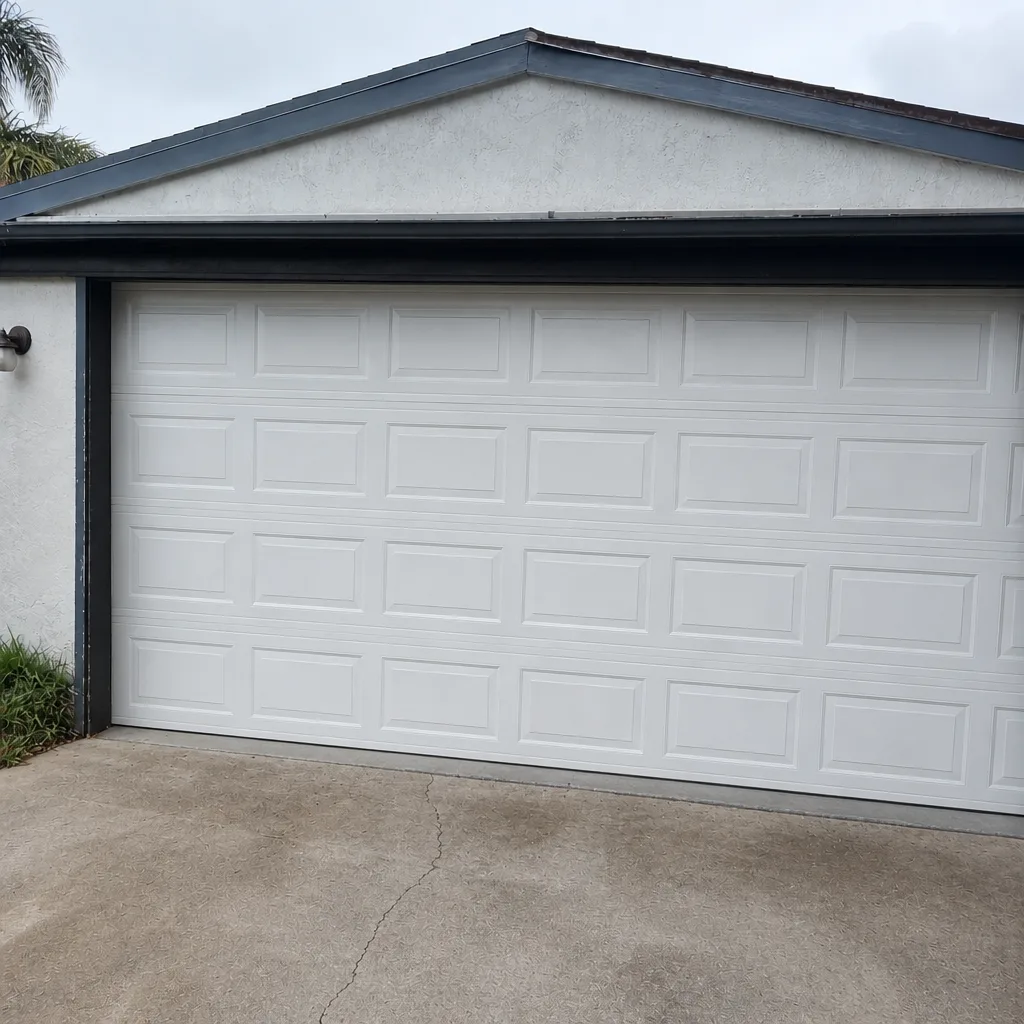 After
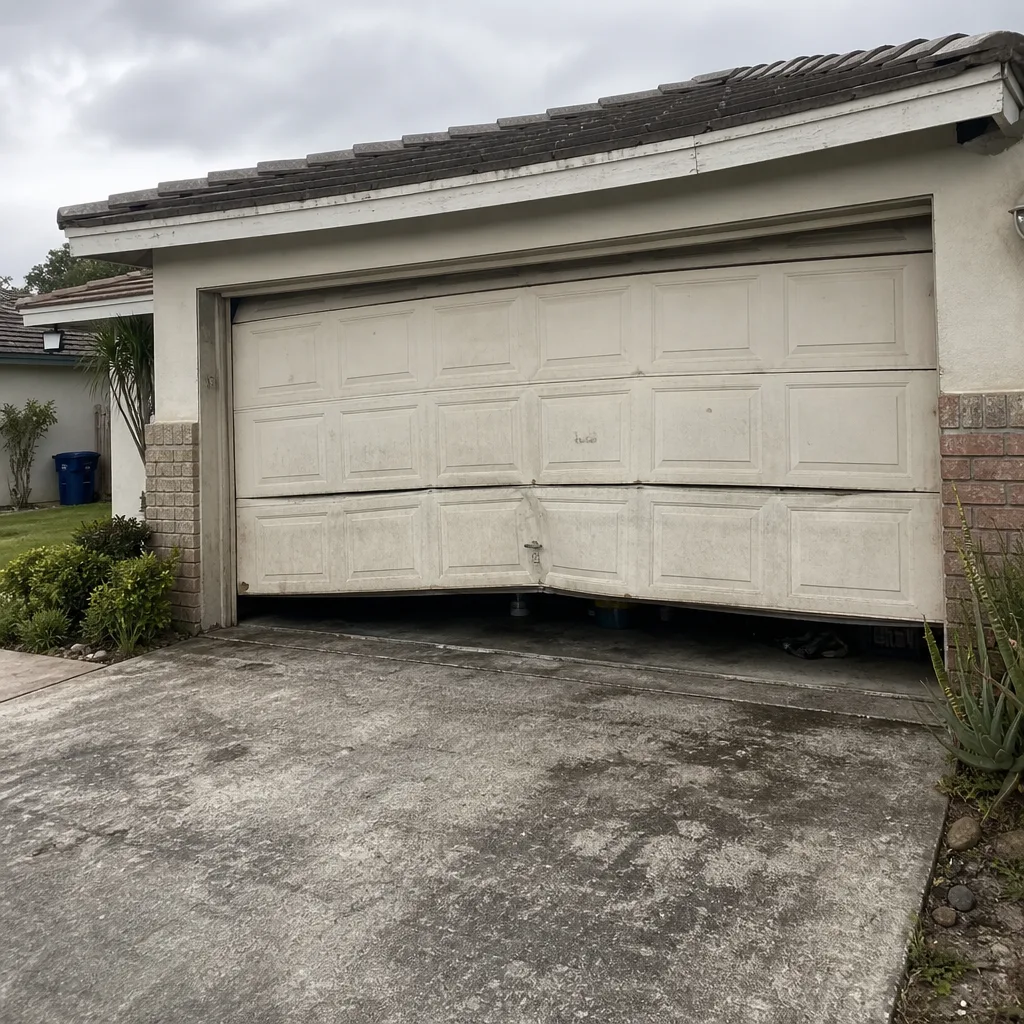 Before
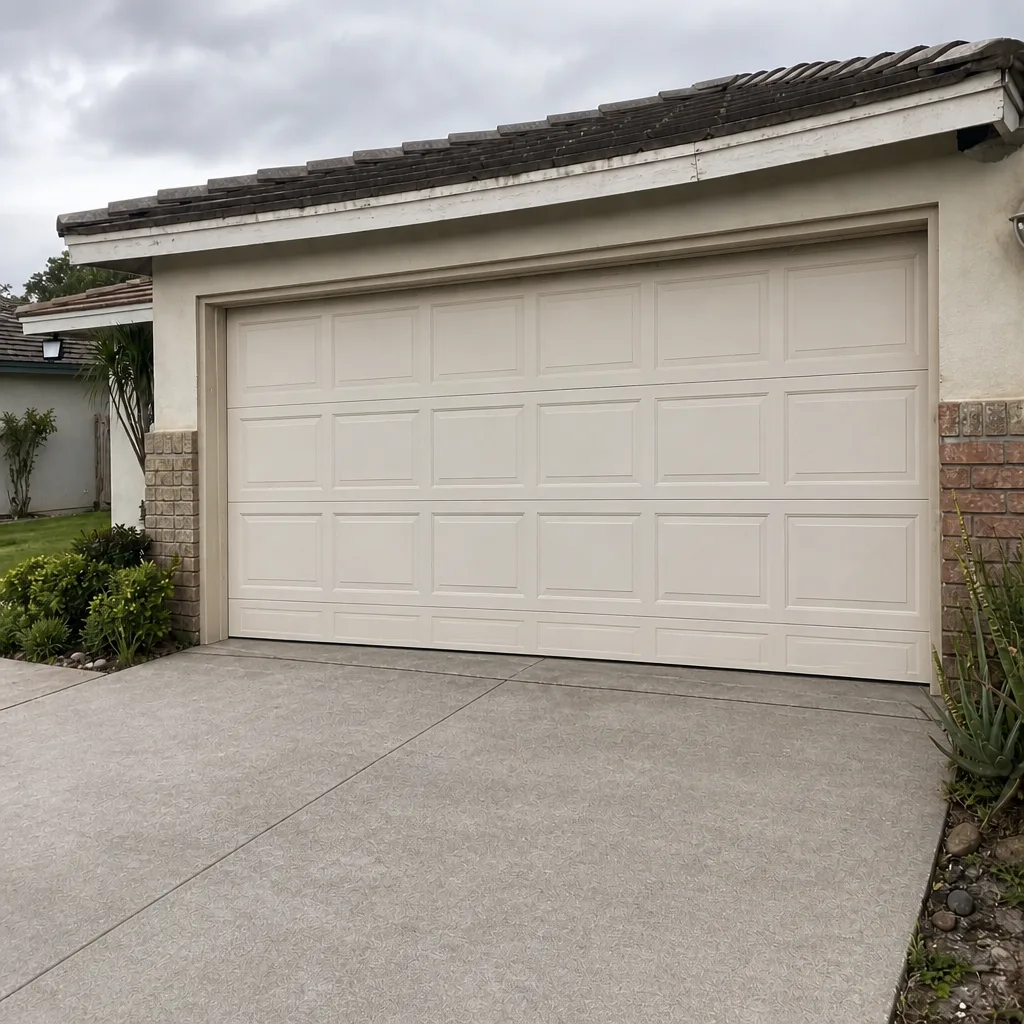 After
When to Call a Professional
Call a technician when a spring snaps (you’ll hear it), when a cable shows a frayed strand, when the door comes off the track, when the opener runs but the door doesn’t move, or when the door is stuck open and you can’t secure it. Those are all cases where the risk of DIY is real and the repair is one visit. Our technicians have up to 9 years of experience with these exact failures, and same-day service is available for emergencies. Sunrise Garage Door Repair Pros offers free estimates in Sunrise – call (855) 658-4060. No work begins until we’ve quoted the price and you’ve agreed to it, in writing.
Frequently Asked Questions
Spring repair in Sunrise typically falls in the range of about $180 to $340 for a single spring, and a matched pair usually costs roughly twice that because both springs should be replaced together. The exact number depends on the spring size, the door’s weight, and whether any cable or drum work is needed. Call (855) 658-4060 for an exact quote – estimates are free, and the written price is locked before any work starts.
If the door is on an opening that falls under Broward County’s high-velocity hurricane zone requirements, yes – it needs to meet the applicable wind-load rating and, in some cases, impact certification. The quickest way to confirm is to call the City of Sunrise building department with your address and current door specs. If you’re re-roofing, re-doors are often part of the same compliance conversation with your insurer.
Most garage door repairs in Sunrise are completed the same day when you call before the early afternoon, especially for springs, cables, and openers. Emergency service is available for doors stuck open or closed, or any door that leaves the home unsecured. Call (855) 658-4060 and describe the problem – we’ll tell you honestly what we can do that day.
No – we quote the price before any work starts, based on a written estimate, and that’s the number you pay. Occasionally a hidden issue (a cracked drum or a bent track) turns up once the door is disassembled. If that happens, we stop, show you what we found, and re-quote before proceeding. You always approve the new price before we touch the door.
The local pro dispatched to your home is licensed and insured as their state requires. We work across every major garage door and opener brand – LiftMaster, Chamberlain, Genie, Clopay, Amarr, Wayne Dalton, Craftsman, and Raynor – so the technician arrives prepared for the brand you already own rather than pushing a replacement. Call (855) 658-4060 to schedule a free estimate.
Keep the door closed and don’t try to lift it – a broken spring means the door is heavier than the opener can safely raise, and forcing it can bend the door or damage the opener. Call for professional spring repair, which is the one repair we will always recommend against doing yourself. Springs store enough energy to seriously injure anyone working near them.
The Bottom Line
A garage door in Sunrise faces a specific set of stressors – high annual rainfall, persistent humidity, salt-influenced air, and a wind-load code that most generic guides ignore. The homeowners who get the longest life out of their doors are the ones who plan for those conditions: they buy wind-rated and insulated where it matters, they match hardware to the climate, they get HOA approval first, and they inspect their springs and cables before something snaps. Nothing on that list is complicated. It just requires knowing what to look for. When you’re ready for repair, a new installation, or a second opinion on the door you have, call (855) 658-4060 for a free estimate – we work on the brand you already have, and the written price is the price.
Written by the team at Sunrise Garage Door Repair Pros.