Last updated November 23, 2026
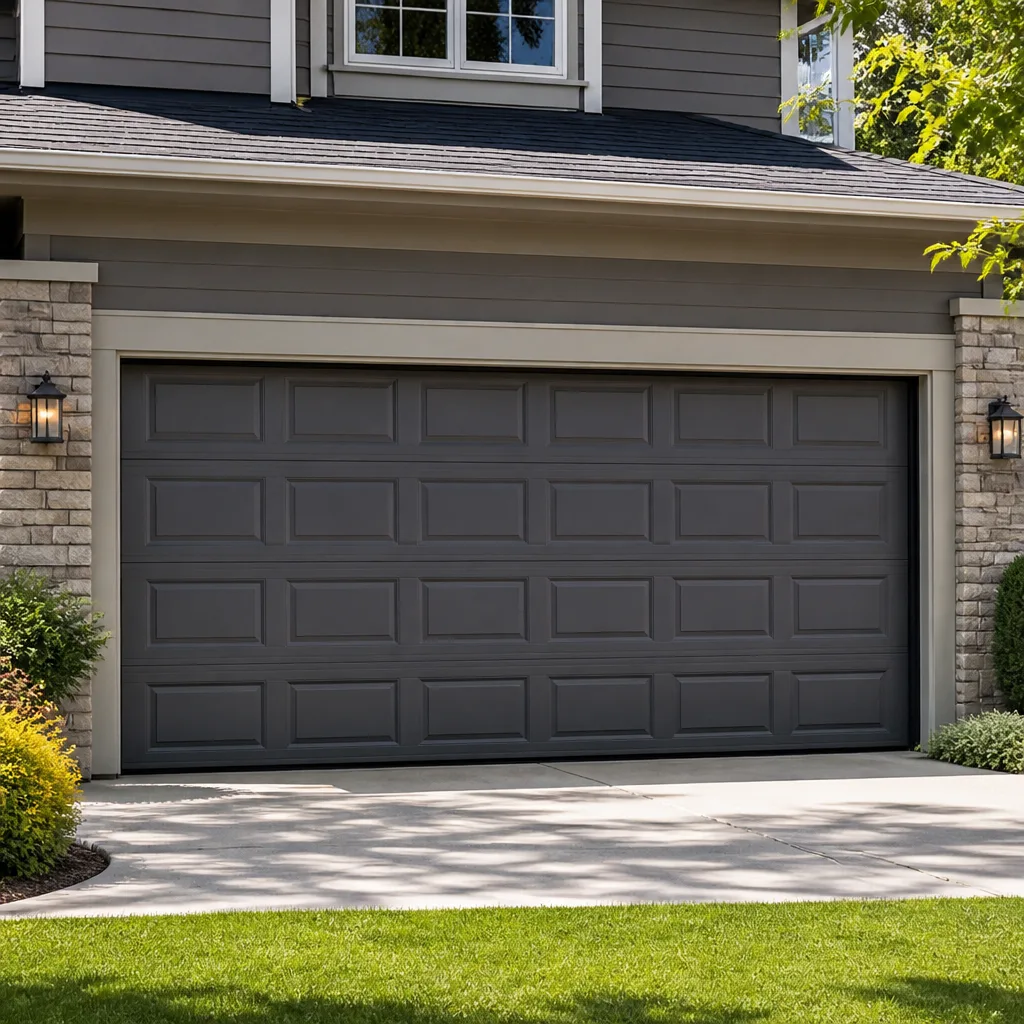 Raised-panel steel
 Carriage house
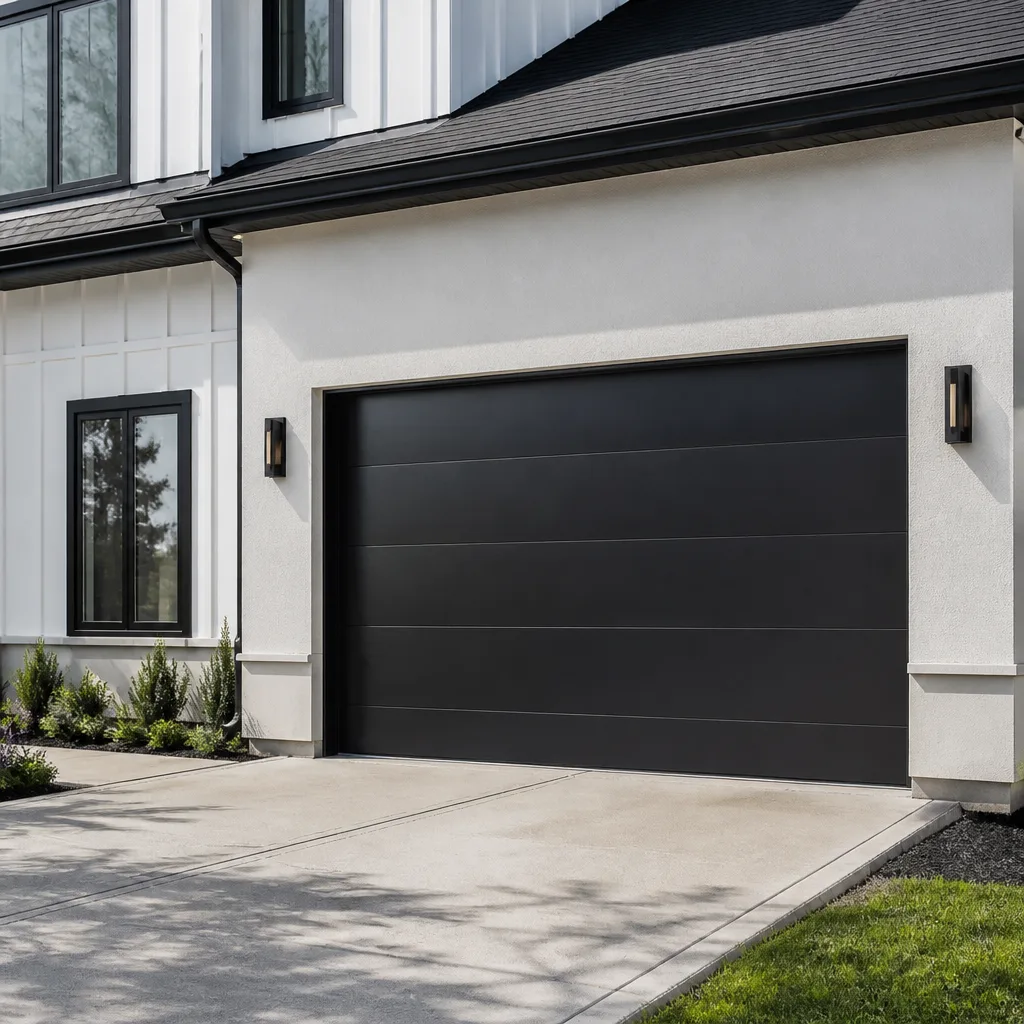 Modern flush
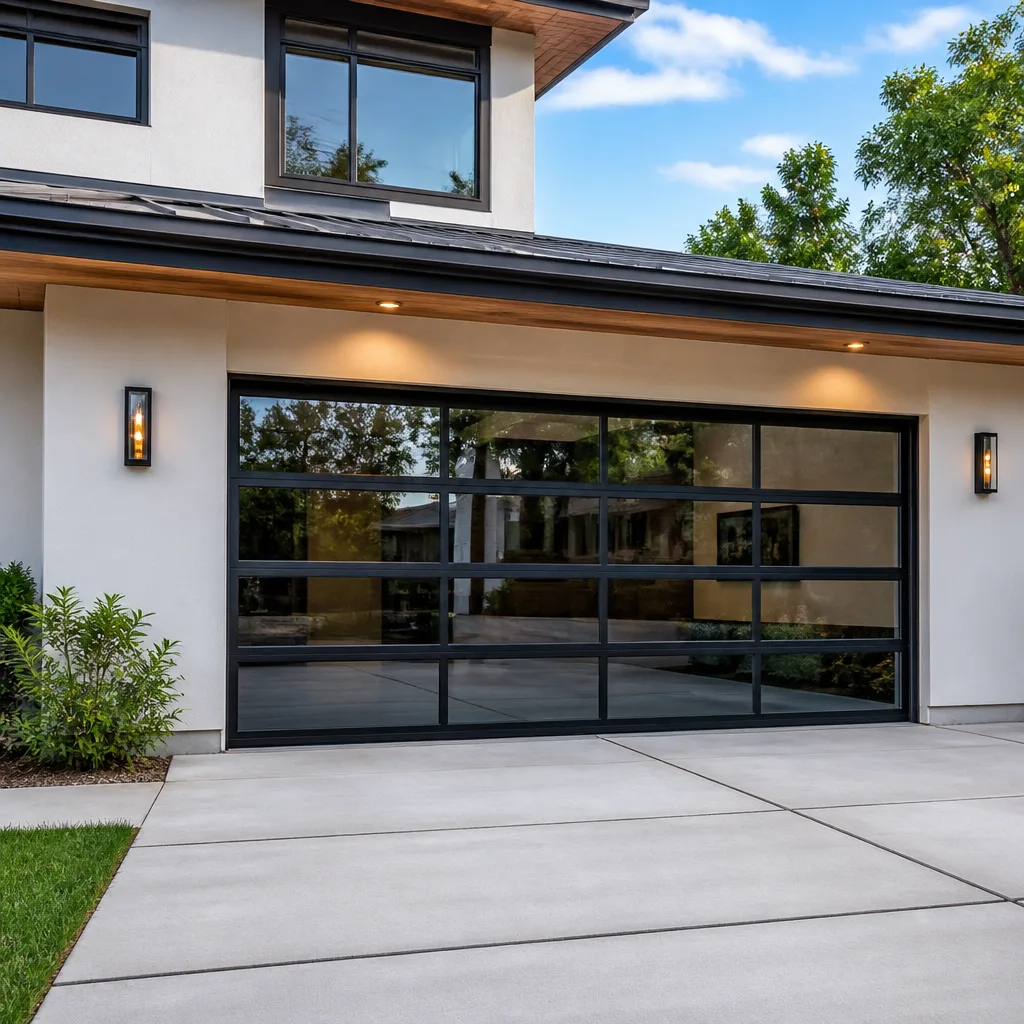 Full-view glass
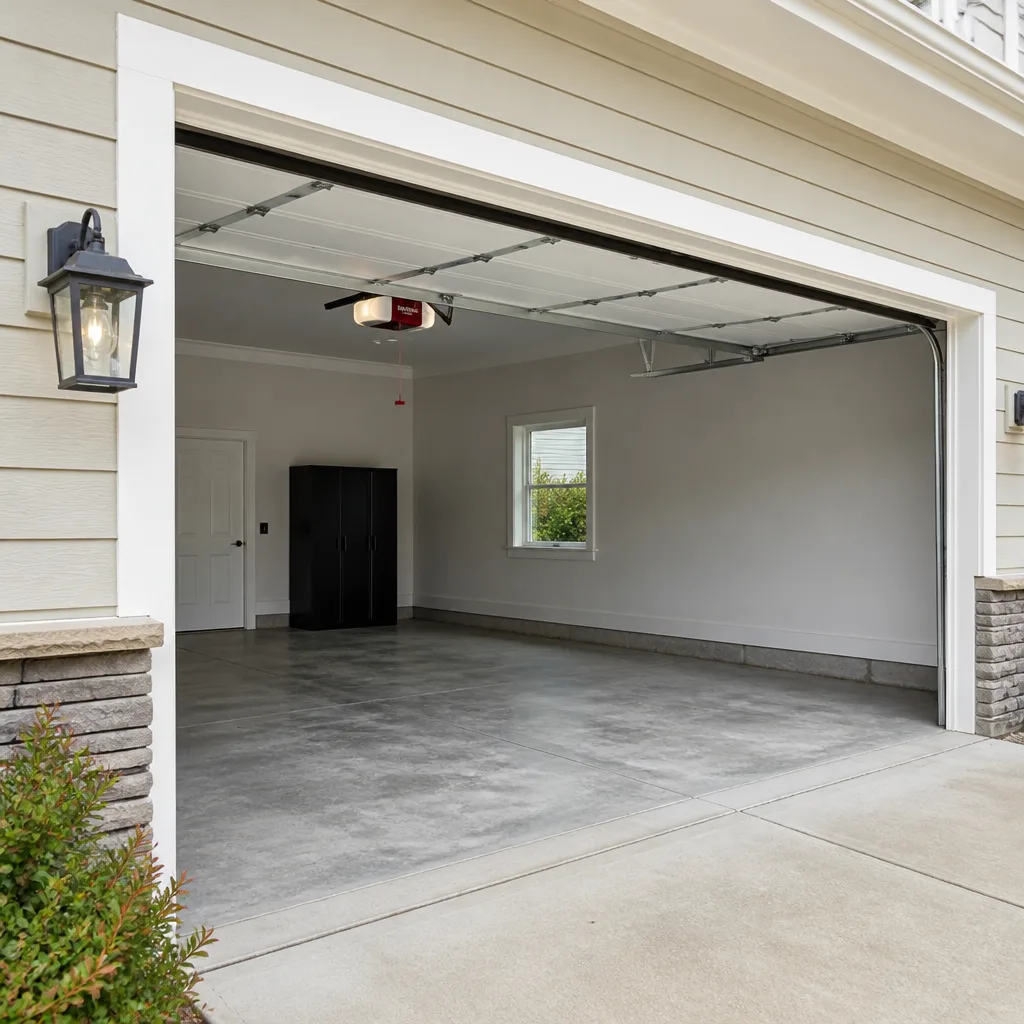 LiftMaster openers
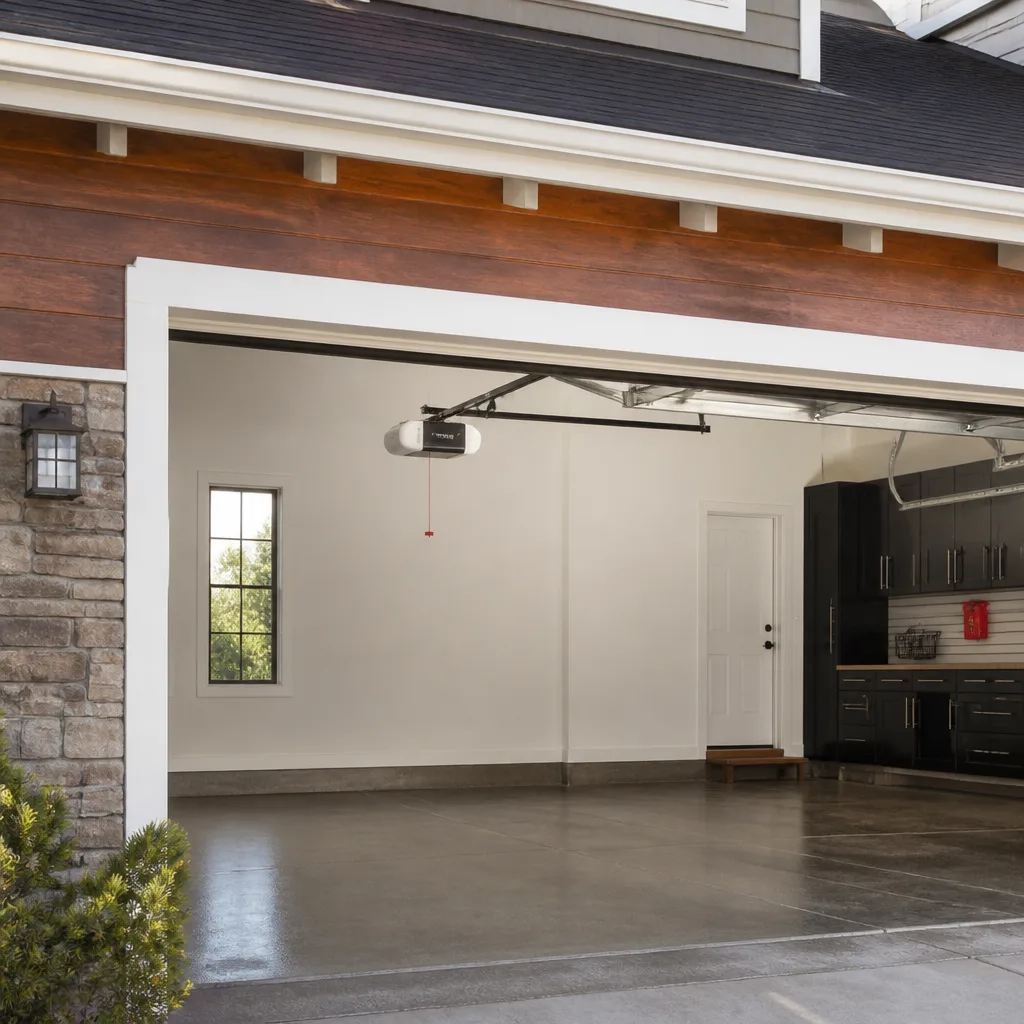 Chamberlain openers
Full 25-point door and opener safety check with every visit - springs, cables, rollers, tracks, and your LiftMaster or Chamberlain opener included
You get a price before we start. It does not change when the pro arrives.
Get your free estimateSeasonal Garage Door Care for Sunrise: Year-Round Homeowner’s Guide
The garage door problem that spikes in Sunrise in January usually isn’t a cold snap. It’s dust. From November through April the air here stays dry, the rain lets up, and homeowners stop thinking about their door entirely because nothing appears to be happening. Meanwhile grit, lawn debris and windblown sand pack into the tracks a little more each week, and the roller bearings run a little drier. By the time the first heavy summer rain arrives, a door that felt fine in December is dragging. This guide maps garage door care to the seasons that actually exist in Sunrise – rain intensity, wind events and humidity swings – rather than to a generic temperature calendar. You’ll learn what to check each month and when to stop and call a technician.
Quick Answer
Garage door care in Sunrise follows a rain-and-humidity calendar, not a cold-weather one. Clean and lubricate tracks during the dry months (November through April), tighten and test all hardware in April and May before storm season, protect seals and rust-prone parts through the wet months (June through September), and run a structured inspection after any significant storm before resuming normal use. Opener motor units mounted in garages that aren’t air-conditioned need attention year-round because South Florida heat ages their internals faster.
Styles & brands we work with
- Raised-panel steel
- Carriage house
- Modern flush
- Full-view glass
- LiftMaster openers
- Chamberlain openers
Table of Contents
- The Dry Season (November through April): What Actually Degrades
- Pre-Rainy Season (April and May): The Hardware Checks That Matter
- Rainy Season (June through September): Seals, Stripping and Rust
- Post-Storm (September and October): A Structured Inspection Sequence
- Year-Round Opener Care in South Florida Heat
- A Simple Monthly Routine You’ll Actually Keep
- Common Mistakes to Avoid
The Dry Season (November through April): What Actually Degrades During Sunrise’s Low-Humidity Months
Dry months feel like a break, and that’s exactly the trap. With less rain falling, debris stops getting washed out of the door’s moving parts and starts accumulating instead. Sunrise sits in a part of South Florida where winter means dust, pollen and yard work, and every bit of it finds the track. Track buildup peaks in the dry season not because there’s more debris than in summer, but because there’s nothing flushing it away.
Here’s what degrades during these months:
- Track channels collect grit that the rollers grind against, slowly wearing the roller surface.
- Roller bearings dry out and start squealing, a sound homeowners often mistake for a failing opener.
- Hinges stiffen as their lubrication film thins out in the drier air.
- Weatherstripping around the door edges stiffens and can crack at the folds.
- Photo-eye lenses on the opener fog over with fine dust, causing the door to reverse for no obvious reason.
A ten-minute monthly pass goes a long way in Sunrise. Wipe down the tracks with a damp cloth, clear the photo-eye lenses, and listen to the door as it cycles. Grinding and squealing are the two sounds worth acting on. This is also the season when a technician can look at a door without pressure, which is why we like dry-season inspections for anything that isn’t urgent – it’s the calm window before storm season. If you hear something that isn’t right, a garage door repair visit is far cheaper than waiting for a failure in July.
Pre-Rainy Season (April and May): The Hardware Checks That Determine Whether Your Door Survives Storm Season Intact
April and May are the most consequential two months on the Sunrise garage door calendar. When the heavy rains arrive in June, you don’t want to discover a loose bracket or a fatigued spring mid-storm. These checks are the ones that decide whether your door comes through the season without a failure.
- Test the auto-reverse. Place a solid object in the door’s path and confirm it reverses. Then test the opener’s force setting per the manufacturer’s manual. A door that doesn’t reverse properly is a safety problem before it’s a storm problem.
- Tighten every bracket and bolt. Wind events rattle hardware loose. Check the hinges, the track brackets, the opener’s mounting points and the lift bracket on the door itself.
- Inspect the springs. Look for gaps in the coils or a visible gap in a torsion spring. Don’t touch them. Springs are under extreme tension and are the most dangerous part of any garage door system. If you see anything suspicious, stop and call a technician.
- Check the balance. Disconnect the opener (pull the release handle) and lift the door halfway. It should stay put. If it drops or rises on its own, the springs or cables need professional attention.
- Look at the bottom seal. A failing seal lets water in during storm season. If it’s cracked or pulling away, replace it before June.
- Clear the drainage path in front of the door. Water pooling at the threshold during heavy rain is a common cause of water intrusion into a garage in Sunrise, and it has nothing to do with the door itself functioning correctly.
These are checks, not repairs. If any step turns up a real problem – especially with springs or cables – that’s the point to bring in a trained professional. Spring work is a named specialty of ours, and it’s a specialty for a reason: a garage door spring repair call is one of the few garage jobs where diy handling causes serious injury.
Rainy Season (June through September): Keeping Seals, Weatherstripping and Rust-Prone Components Functional
Once the rains start in June, the goal changes. You’re no longer preventing buildup; you’re protecting your door from daily moisture and humidity. Sunrise gets a lot of rain in these months, and metal parts that stay wet and warm are prime candidates for rust.
The main vulnerable areas are the bottom seal, the weatherstripping around the door jambs and the lower tracks. Standing water near the threshold and consistent humidity mean moisture can sit where the door meets the floor all day. If your seal is brittle, it won’t keep water out, and if your lower track has nicks or scratches in its finish, rust will develop there first.
What to do during the wet season:
- Wipe the bottom seal dry after heavy rain and check for cracks or separation.
- Treat bare metal spots on the tracks with a light lubricant to slow corrosion. Please use one that doesn’t attract grit.
- Keep the photo eyes clean. Moisture and dust together fog the lenses faster than dust alone.
- Watch for rust on the hinges and roller shafts. Any brown staining is worth cleaning and treating before it spreads.
- Don’t force a sluggish door. If the door is dragging in humid weather, it’s a sign the rollers or tracks are binding. Running it anyway wears the opener out faster.
This is the season when we see the most binding and dragging, and it’s also when a door that’s going to fail will start showing symptoms. If you’re unsure what you’re hearing, the fix is usually in the tracks or rollers. A visit for garage door repair in the rainy season is far better than an emergency call in the middle of a storm.
Post-Storm (September and October): A Structured Inspection Sequence Before You Resume Normal Operation
After any significant wind or rain event, don’t just press the remote and assume everything is fine. A storm can shift a track by a fraction of an inch or knock a photo eye out of alignment without causing an obvious failure. Do your inspection in this order.
- Do a visual sweep before touching anything. Look at the track alignment, hinges, brackets and springs. If the door is visibly off its tracks or a cable is slack, stop. Don’t operate the door.
- Check the photo eyes. Make sure the two lenses are pointed at each other and the indicator light is solid. If it’s flickering, clean the lens and realign.
- Open the door slowly. Listen for grinding, popping or uneven movement. A scraping track will be obvious on the first cycle.
- Confirm the safety reverse still works. It’s a quick test and should be part of your post-storm habit.
- Wipe the tracks and wipe down any wet metal. Standing water in the tracks after a storm is a rust problem waiting to happen.
- Look at the bottom seal and the threshold. If water came in, you need to know whether the seal held or leaked.
- Test the opener’s battery backup if it has one. More on why this matters in Sunrise below.
Most post-storm inspections end with nothing worse than a wipe-down. But if the door is off track, the spring is damaged or the opener feels like it’s struggling, that’s a stop point. A technician with the right tools can correct track alignment without forcing the door and risking damage to the panels. If the door won’t move at all, that’s our emergency call out; “when your door won’t move, we will” is the entire reason that line exists. We also handle garage door repair for track and hardware damage after storm events, and we can work with your insurer on any covered damage you need to document.
Year-Round Opener Care in South Florida Heat
Your opener lives in a space that isn’t air-conditioned and that gets hot for much of the year. That heat matters. A motor unit that runs in high temperatures will see more thermal stress on its electronic components, and components that get less airflow tend to age faster. That’s true for any brand, whether your door runs on a LiftMaster or a Craftsman opener or anything else. We work on the brand you already own.
What compensates for the heat:
- Keep the opener’s surroundings clear. Boxes stacked near the ceiling unit block airflow and hold heat. Give it room.
- Listen for changes. Any new grinding, rattling or groaning is a sign the motor is working harder than it should, and the cause is usually mechanical rather than electronic.
- Test the safety reverse monthly. It’s the single most important test and the easiest to forget.
- Check the battery backup. South Florida’s storm-season outages mean a dead battery can leave you locked in or out. Test it at the start of the rainy season.
- Don’t ignore a straining motor. If the opener is laboring, the problem may be a binding track or a tired spring, not the opener itself. Replacing the opener while the real cause goes unaddressed wastes money.
Here’s where a brand-fluent technician earns their keep. We’re trained across LiftMaster, Chamberlain, Genie, Clopay, Amarr, Wayne Dalton, Craftsman and Raynor systems, so we diagnose the door in front of us rather than recommending a new unit because it’s the easy answer. When an opener needs service, that’s garage door opener repair. When the opener is fine and the problem is mechanical, we fix the mechanical. And when the chain, belt or electronics are genuinely at end of life, the fix is a repair, not a sales pitch.
A Simple Monthly Routine You’ll Actually Keep
The best care schedule is the one that fits into a Saturday morning, not a full weekend. Here’s the routine we recommend for a Sunrise home. It takes about fifteen minutes.
- Look and listen. Cycle the door once and listen for grinding, squealing or uneven movement. Fix any sound you didn’t hear last month.
- Wipe the tracks. A damp cloth removes dust, grit and cobwebs. Do this more often during dry months.
- Clean the photo eyes. Wipe both lenses with a soft cloth.
- Test the auto-reverse. Put an object in the path and confirm the door reverses.
- Check the bottom seal. Look for cracks and pull the seal back slightly to check for water trapped inside.
- Snug any visibly loose bolts. Don’t overtighten; if something is very loose, let a technician look at it.
- Check the opener’s battery backup. Especially in storm season.
- Note the spring. Visual check only. If you see a gap in the coils, call us and don’t run the door.
If this feels like a lot, split it. Do the listening and wiping every month and the full check at the start of each season. That’s still enough to catch most failures before they become emergencies. Sunrise homeowners who do this at least save themselves the surprise of a door stuck closed during a workweek.
Common Mistakes to Avoid
- Treating the dry season as a break. In Sunrise, dust and debris accumulate when there’s no rain to wash it out. Track buildup is worst in winter, not summer, and that’s exactly the opposite of what most care advice assumes.
- Lubricating the tracks themselves. Tracks attract grit if you oil them; lubricate the rollers, hinges and springs, not the channels. Oiled tracks gather dust faster in Sunrise’s dry months.
- Ignoring the bottom seal until it fails. During the rainy season, a worn seal lets water into the garage and rots the door’s lower edge. Replace it before June, not after.
- Running the door after a storm without checking alignment. A door slightly off its track looks fine until it derails. Do the visual sweep first.
- Trying to adjust the springs yourself. Springs are under extreme tension and are the most dangerous component on the door. This is not a homeowner job, regardless of what a video shows.
- Replacing the opener when the door is the problem. A motor that strains usually reflects a binding track or tired spring. Diagnose the door before you buy a new opener.
- Stacking boxes against the opener. Blocking airflow around a motor that runs in a hot garage is the simplest way to shorten its life.
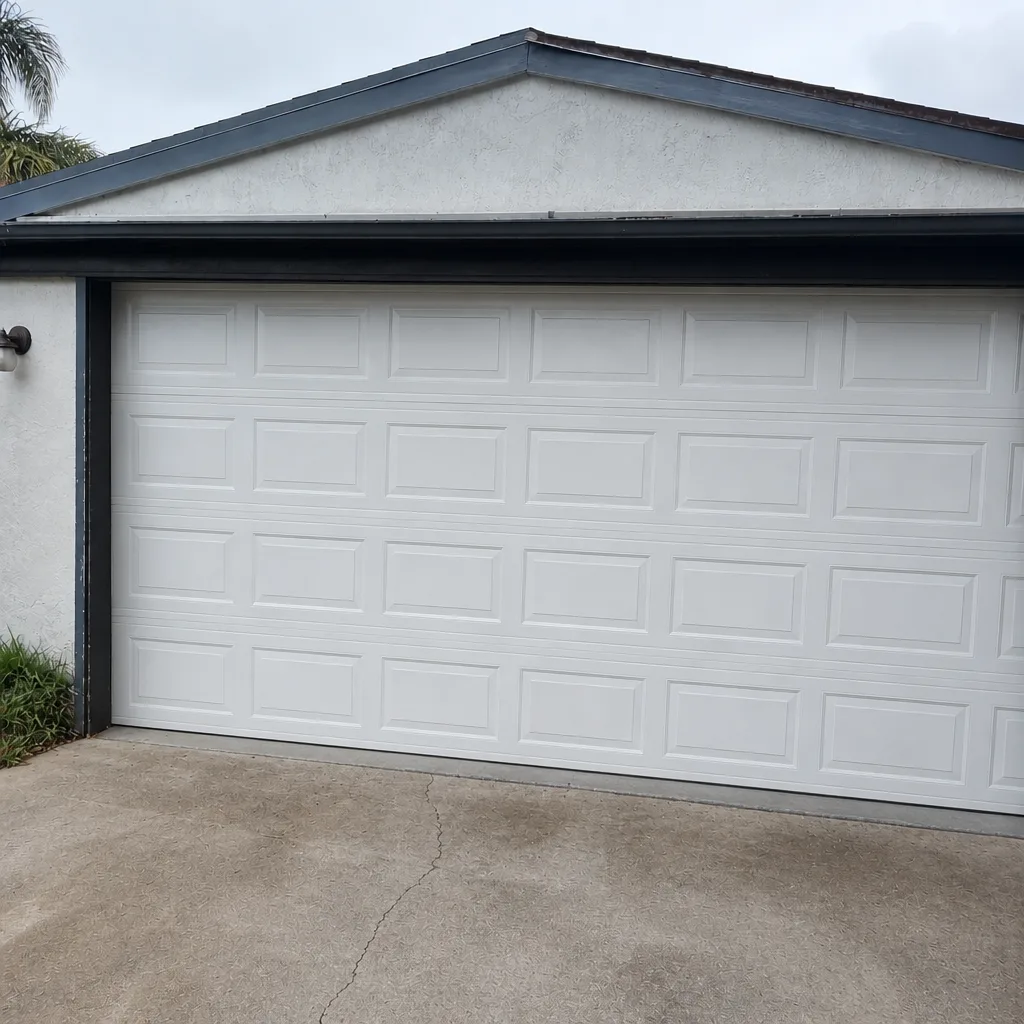
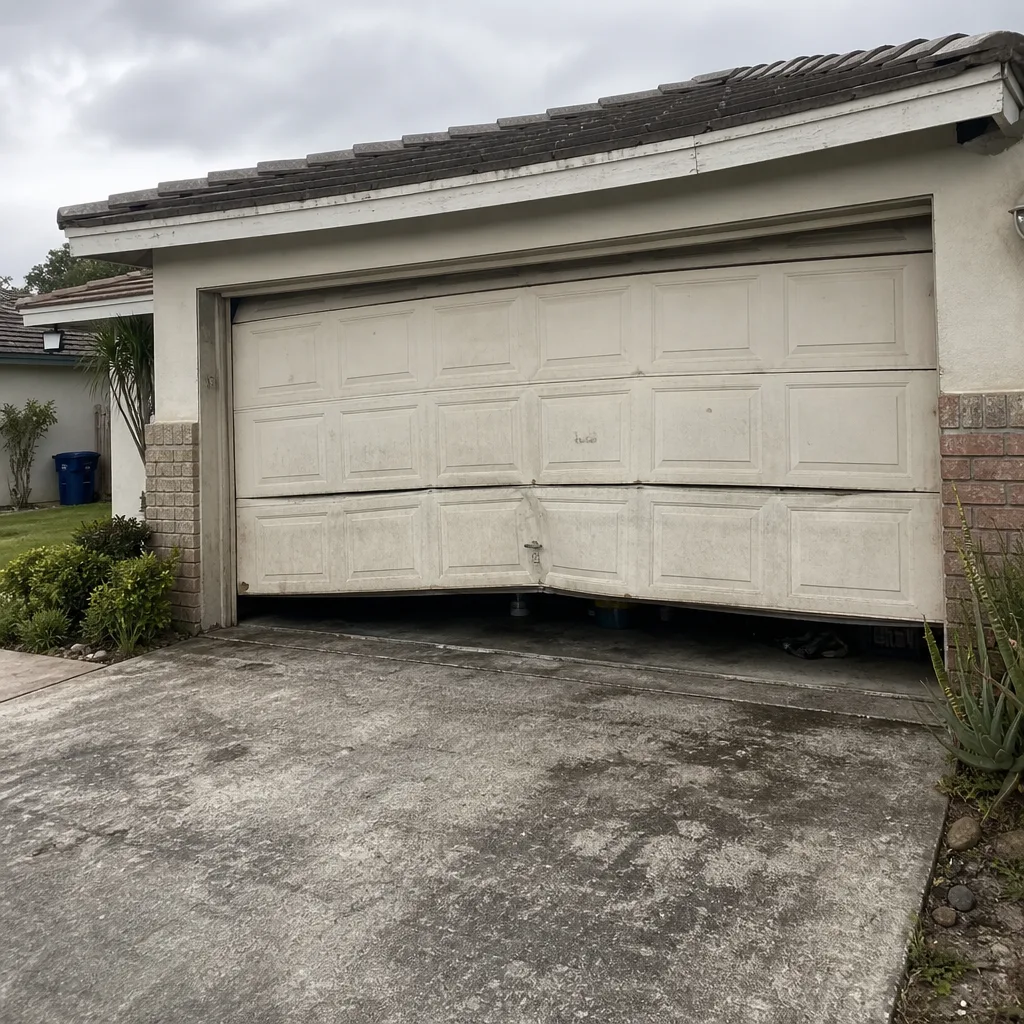
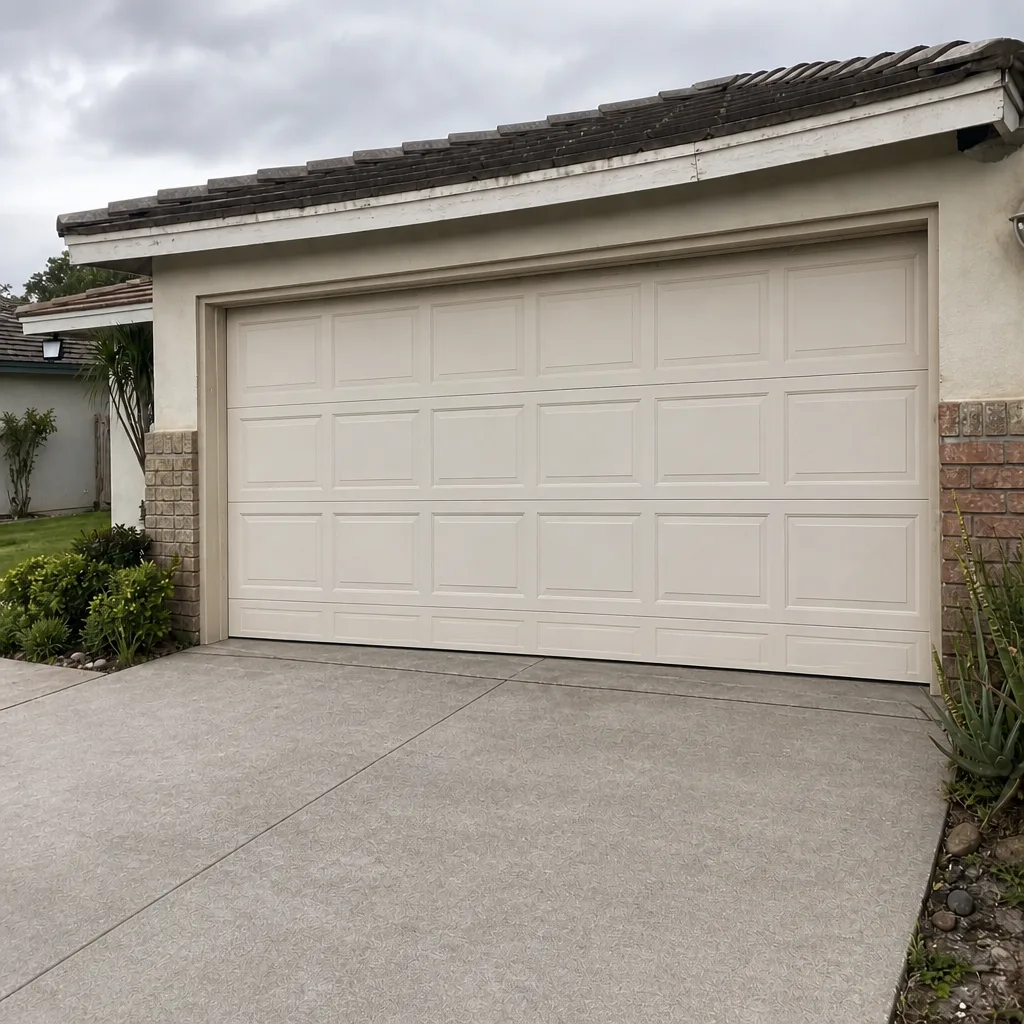
See the difference
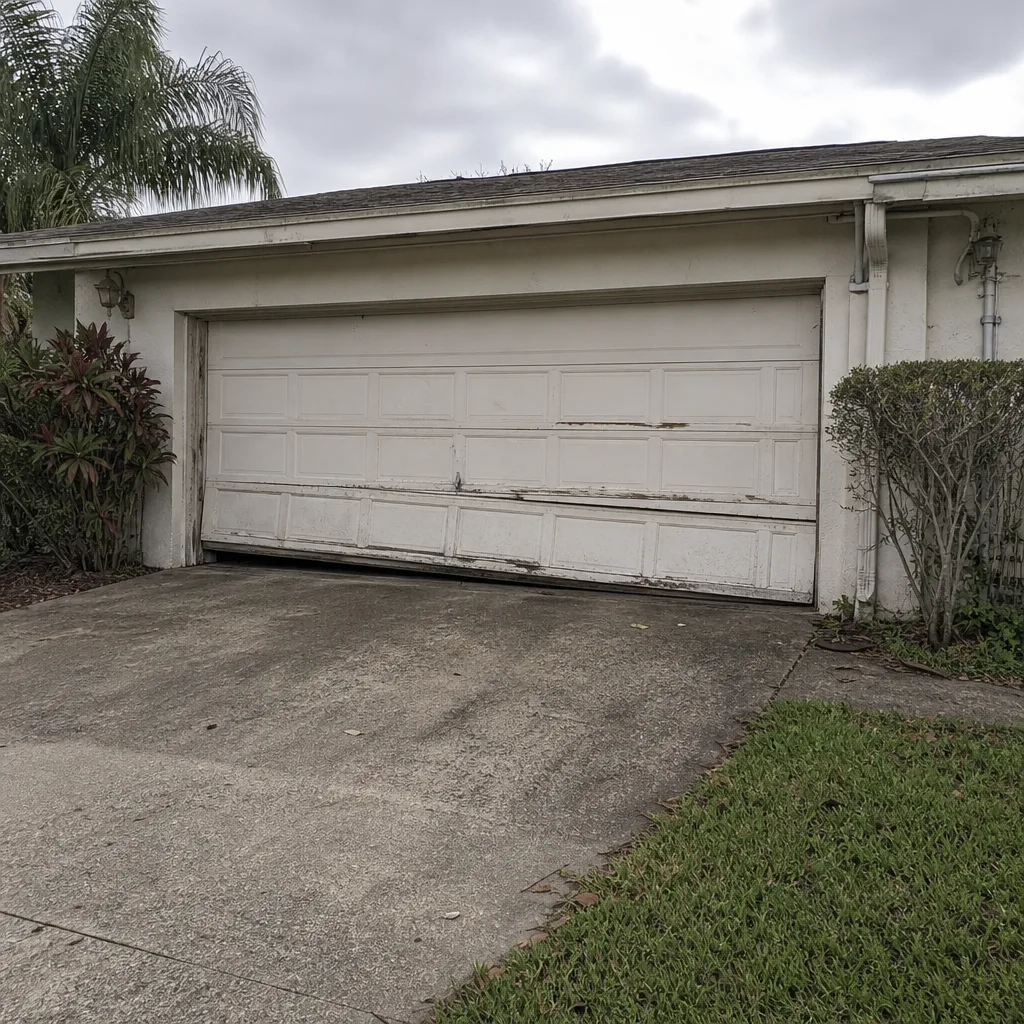 Before
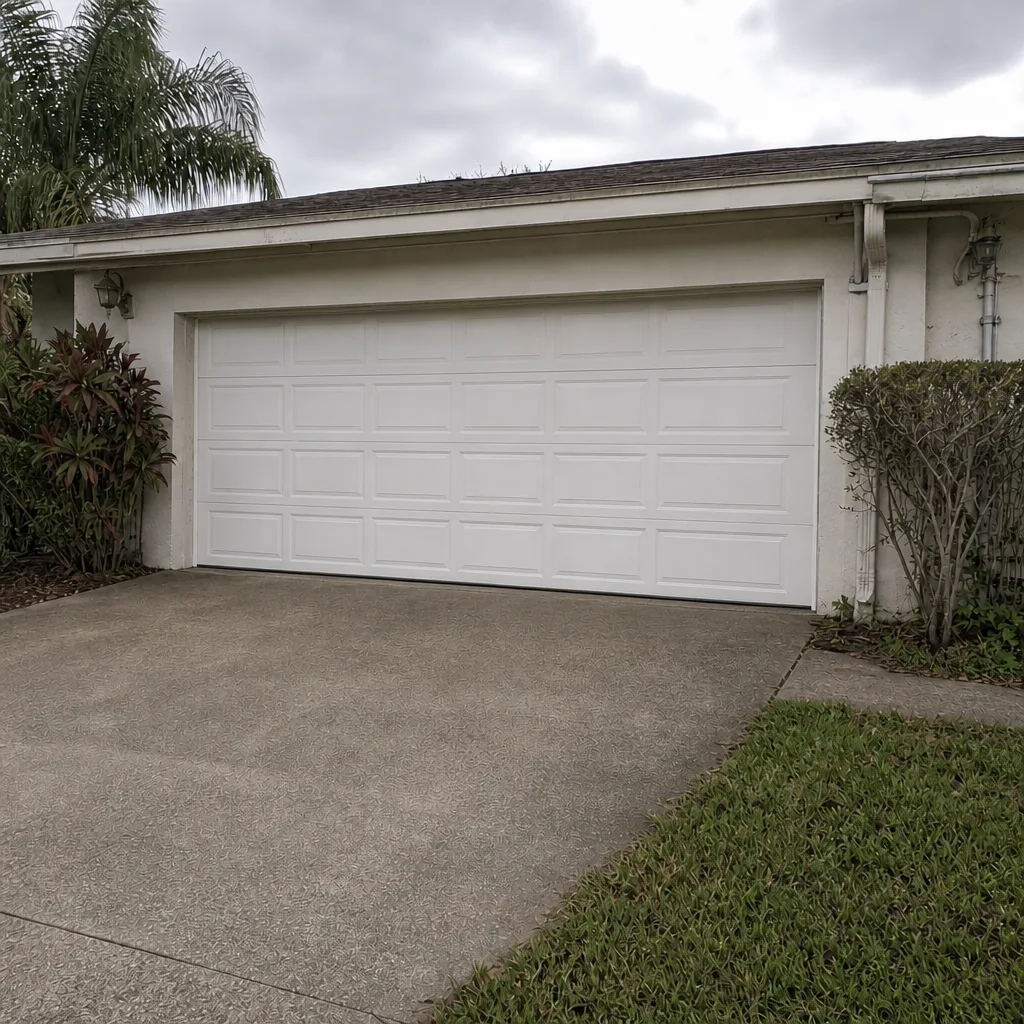 After
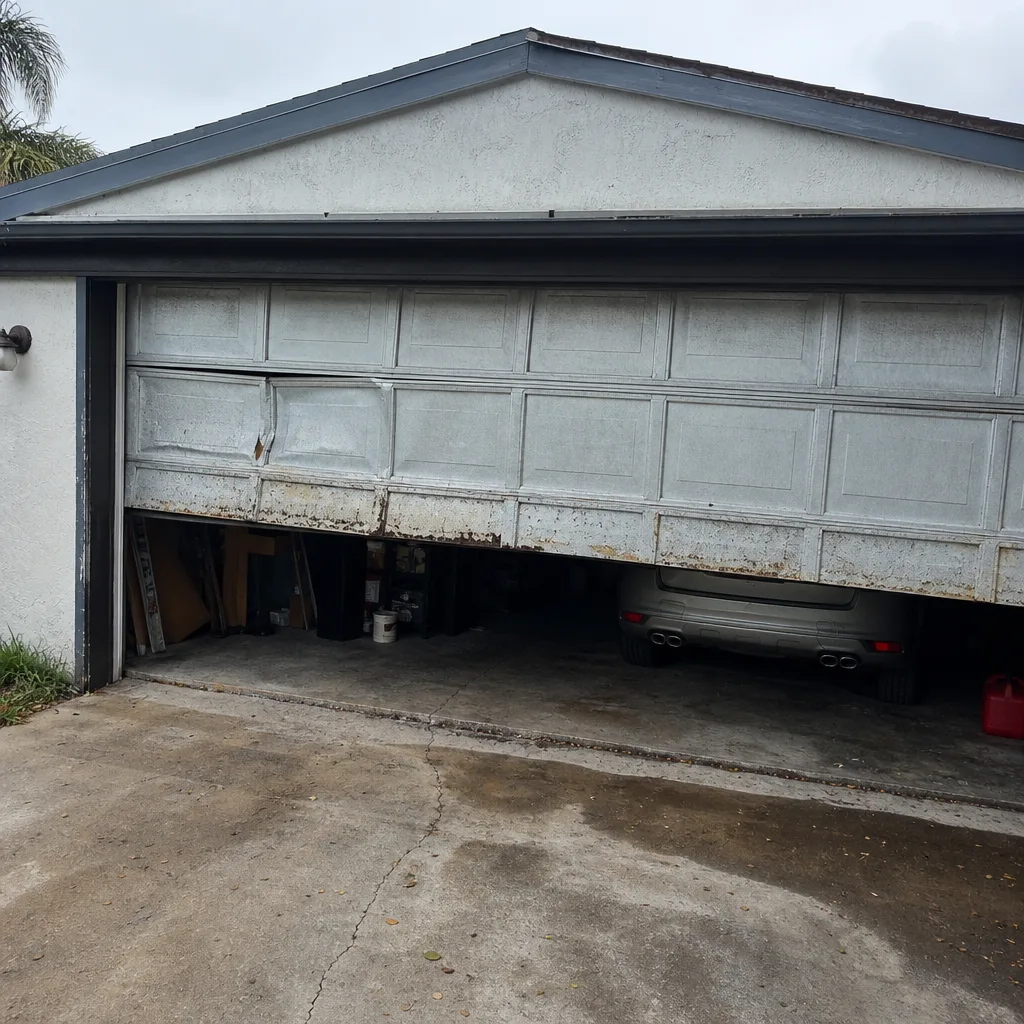 Before
 After
 Before
 After
When to Call a Professional
Some jobs are fine to handle yourself; others aren’t. Call a technician if the door won’t move, if it’s visibly off its tracks, if you see a gap in a spring or the door doesn’t balance halfway, if a cable is slack or damaged, if the opener is straining or making new noises, or if the photo eyes won’t show a solid indicator after cleaning and realigning. Those are the cases where running the door risks more damage and, in the case of springs, personal safety. We handle high-tension hardware as a specialty, and our technicians have up to 9 years of experience. Sunrise Garage Door Repair Pros offers free estimates in Sunrise, and you can reach us at (855) 658-4060 to book an inspection before storm season or after one.
Frequently Asked Questions
About once a season is enough for most homes, with a quick monthly check in between. That means one full inspection at the end of the dry season in April or May, one after the rainy season winds down in September or October, and a light monthly pass for noise and photo eyes. If your door gets heavy daily use or you have a property with several units, tighten the interval. Call (855) 658-4060 for a free estimate if you’re not sure where your door stands.
Because dry months let grit and dust settle into the rollers and hinges and let the lubricating film thin out. There’s no rain to flush the debris away, so it accumulates until the bearings grind. In Sunrise this shows up from roughly November through April. A monthly wipe-down and proper lubrication of the rollers and hinges usually silences it. If the squeak comes with dragging or grinding, call (855) 658-4060.
No. Springs hold enormous stored energy, and they’re the most dangerous part of any garage door system. Spring repair is a job for a trained technician, and we specialize in it for exactly this reason. If you see a gap in the coils or the door won’t hold halfway, stop using the door and call (855) 658-4060 for a free estimate.
Do a visual sweep first, then check the photo eyes, open the door slowly once, test the auto-reverse, and wipe the tracks and any wet metal dry. If the door is off its tracks, if a spring looks damaged, or if the opener is straining, stop and call us. We run a structured inspection after storm events and can work with your insurer if damage needs documenting. Call (855) 658-4060.
It can shorten its life, yes. Motor units mounted in garages that aren’t air-conditioned run hotter through most of the year, and heat puts stress on electronics. Keep the area around the opener clear so it gets airflow, and listen for new noises. If the opener is straining, the cause is often mechanical rather than electronic, and we can diagnose it before you spend money on a replacement. Call (855) 658-4060.
We’re trained across LiftMaster, Chamberlain, Genie, Clopay, Amarr, Wayne Dalton, Craftsman and Raynor systems. That means we can service the door and opener you already own rather than steering you toward a replacement because it’s easier. Seasonal maintenance, spring repair, opener service and full installation all fall under one call. Sunrise Garage Door Repair Pros keeps the focus on getting your door working again. Call (855) 658-4060 for a free estimate.
The Bottom Line
Garage door care in Sunrise follows rain and humidity, not temperature. The dry months from November through April are when dust and grit quietly build up in the tracks; April and May are when you tighten hardware and check the springs before storm season; June through September is when you protect the seals and rust-prone parts; and September through October is when you inspect carefully after weather events before resuming normal use. Add a monthly listen-and-wipe session and a year-round eye on the opener’s heat exposure, and you’ll prevent most of the failures that reach us as emergencies. When something looks or sounds wrong, call a technician rather than forcing the door. Springs, cables and track alignment are not diy territory.
Contact Us
Sunrise Garage Door Repair Pros is a garage door specialty company serving Sunrise and the surrounding area. We repair, service openers, replace springs, install new doors and respond to emergencies. Free estimates, and the price is quoted and agreed before any work starts. Call (855) 658-4060 to book a seasonal inspection or get an estimate.
Written by the team at Sunrise Garage Door Repair Pros.