Last updated November 23, 2026
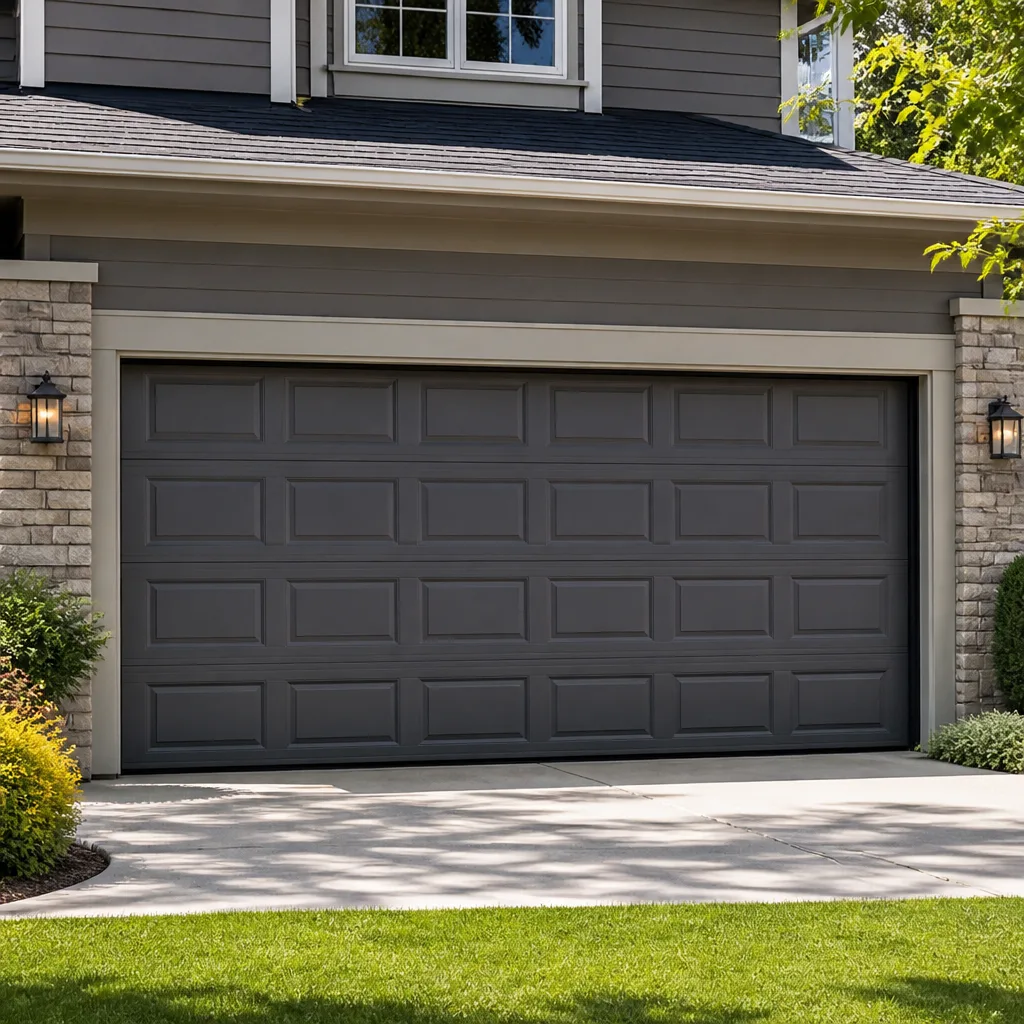 Raised-panel steel
 Carriage house
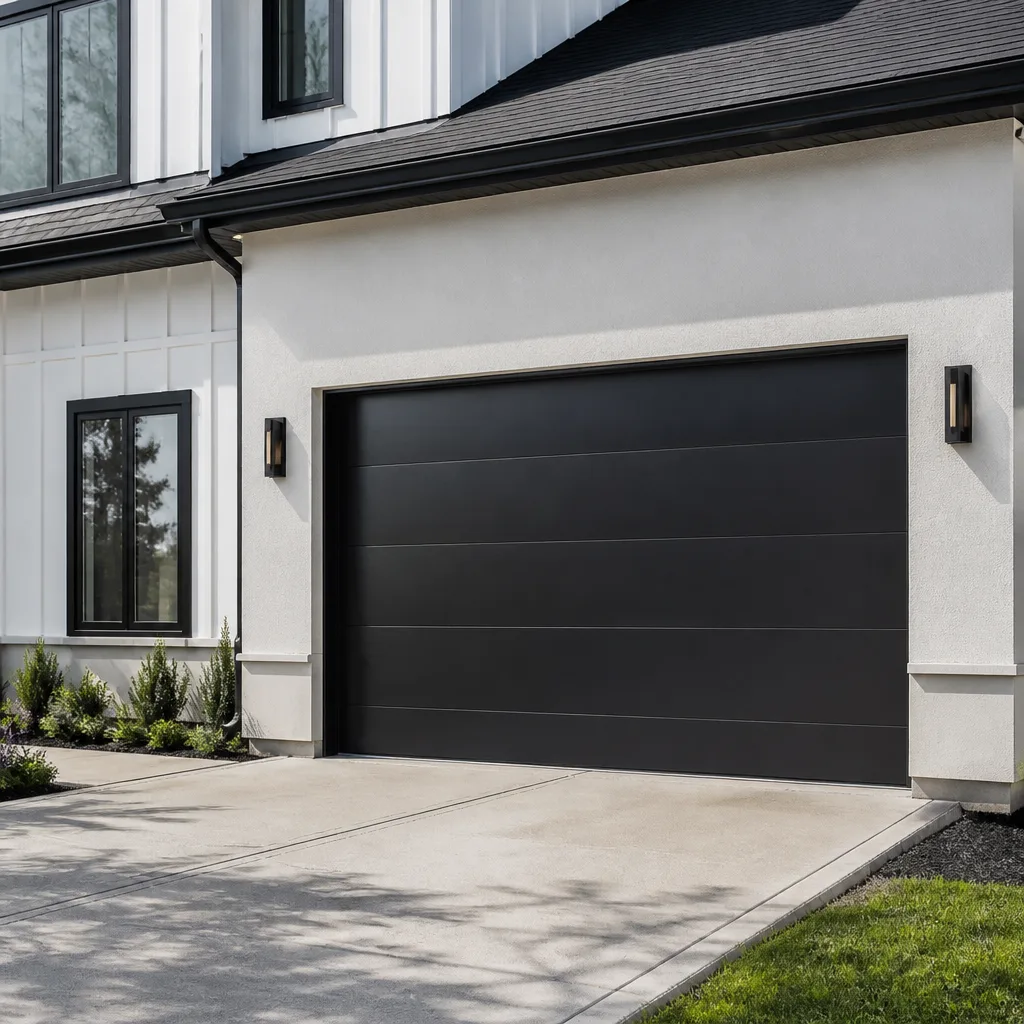 Modern flush
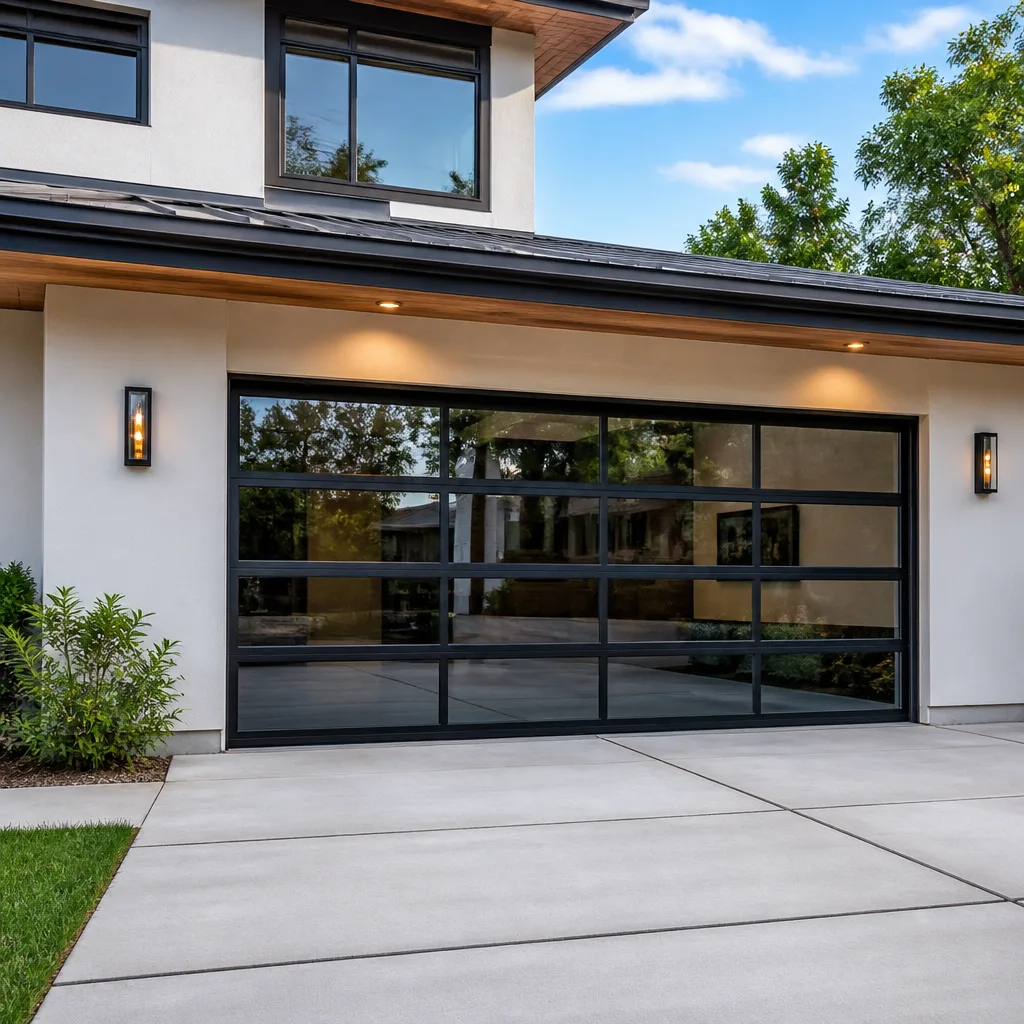 Full-view glass
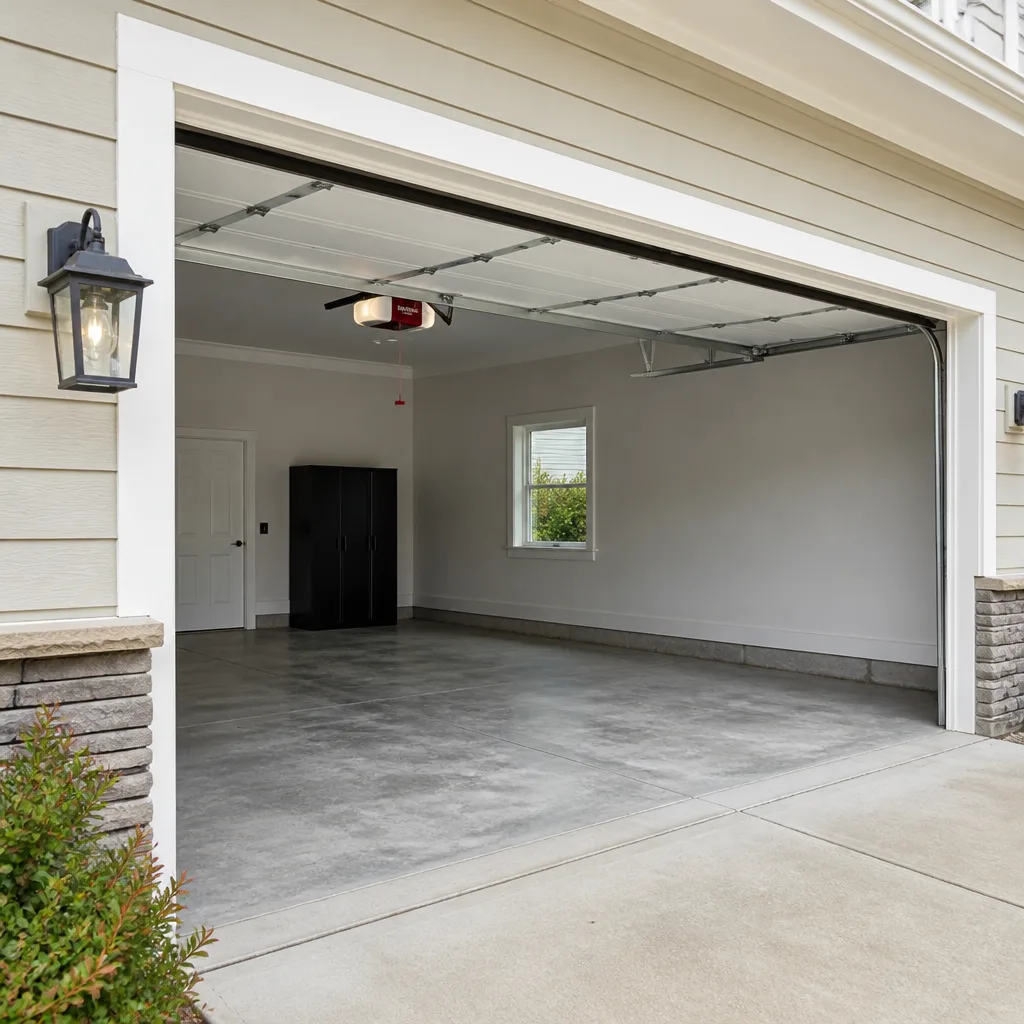 LiftMaster openers
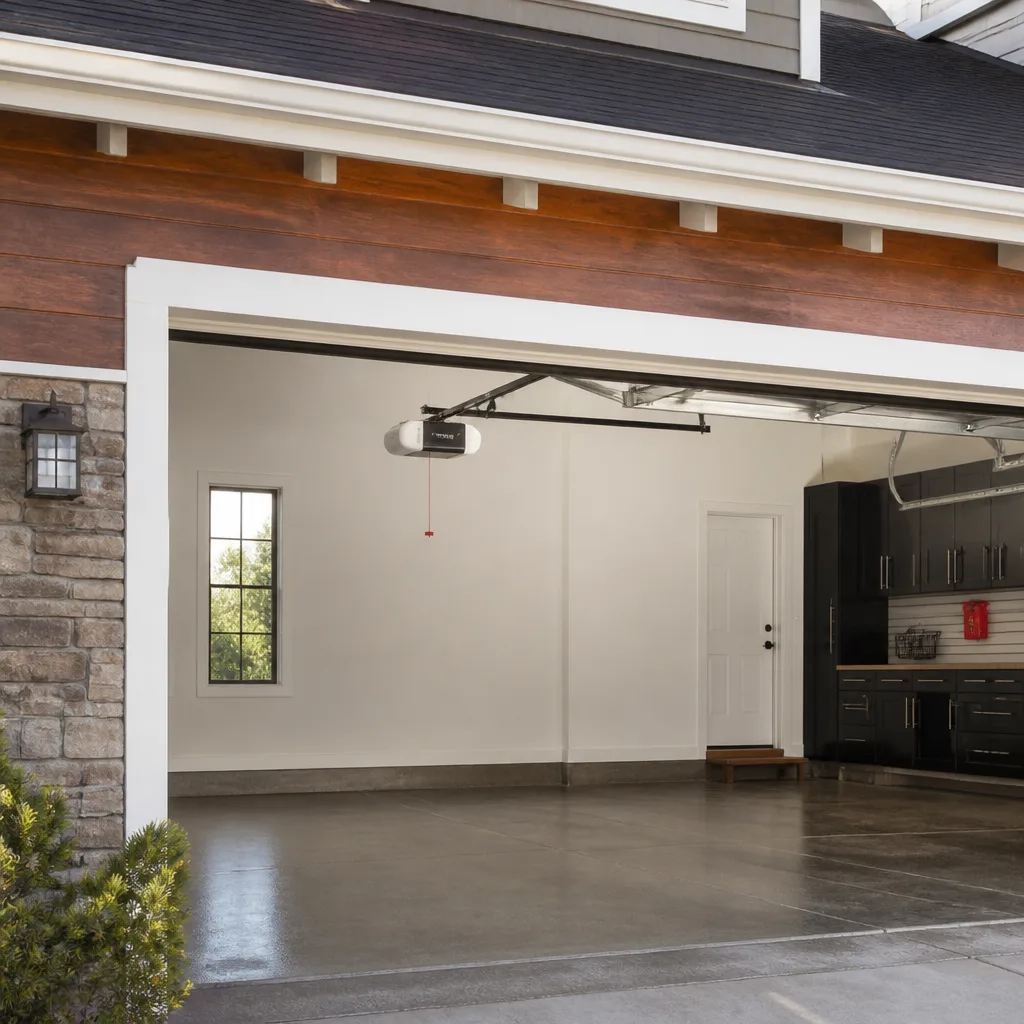 Chamberlain openers
Full 25-point door and opener safety check with every visit - springs, cables, rollers, tracks, and your LiftMaster or Chamberlain opener included
You get a price before we start. It does not change when the pro arrives.
Get your free estimateGarage Door Repair Maintenance Checklist for Sunrise Homeowners
Most garage door failures after a Broward County storm don’t start with wind. They start with a bracket or fastener that was already corroding quietly for a year and finally gave way under load. That’s a maintenance failure wearing a weather event’s clothes. If you live in Sunrise, your door faces two very different threat seasons, hurricane prep in late spring and post-storm recovery in fall, and the generic four-season checklist written for Ohio won’t help you with either. This guide gives you a 12-month schedule built around South Florida’s actual calendar, tells you which tasks you can safely handle yourself, and flags the ones that belong to a trained technician.
Quick Answer
A homeowner in Sunrise should inspect and lubricate their garage door monthly, tighten hardware and test the auto-reverse safety feature every quarter, and book a professional tune-up once a year. The critical local dates are before June 1, when you complete your pre-hurricane inspection, and immediately after any named storm, when you should not operate the door until a visual inspection confirms the tracks, brackets, and springs are intact.
Styles & brands we work with
- Raised-panel steel
- Carriage house
- Modern flush
- Full-view glass
- LiftMaster openers
- Chamberlain openers
Table of Contents
- Why Sunrise Needs a Two-Season Checklist, Not Four
- The Month-by-Month Schedule
- Lubrication in Florida Humidity: What Works and What Backfires
- Pre-Hurricane Season: The June 1 Checklist
- Post-Storm Inspection Protocol
- The DIY Ceiling: What You Can Do vs. What Florida Law Leaves to Technicians
- Parts That Fail Quietly in Sunrise Heat
- What a Professional Tune-Up Actually Covers
Why Sunrise Needs a Two-Season Checklist, Not Four
National garage door checklists divide the year into four tidy seasons: spring cleaning, summer prep, fall winterization, winter endurance. That framework assumes hard freezes, snow loads, and salt on the roads. None of that applies to Sunrise. What does apply is a long hot humid stretch from roughly May through October, a hurricane season that runs June 1 through November 30, and a winter that’s mild enough that your door never gets a cold-weather stress test.
The practical result is that your door’s two highest-risk windows are both tied to storm activity, not temperature. In late spring you’re preparing hardware to handle wind load. In fall you’re assessing what months of heat, humidity, and at least one close call did to fasteners and brackets. The rest of the year is maintenance in the ordinary sense: keeping moving parts lubricated, keeping tracks clear, and catching small wear before it becomes a failure.
We’ve seen this pattern hold across Sunrise neighborhoods from Sawgrass to Sunrise Lakes: doors that get a spring and fall inspection survive storm season far better than doors that only get attention when something breaks. The schedule below is built around that reality, and it accounts for the fact that your door’s most dangerous component, the torsion spring or springs above the door, is also the one you should never touch yourself.
The Month-by-Month Schedule
Here’s the year on a single page. Treat it as a general guide and adjust around your own door’s age and use.
- January: Full visual inspection. Look at cables for fraying, springs for gaps or sag, and hinges for rust. Lubricate hinges, rollers, and the torsion spring with a silicone-based or lithium-based garage door lubricant.
- February: Test the auto-reverse safety feature. Place a roll of paper towels under the door and confirm it reverses on contact. Test the photo-eye sensors by waving an object through the beam.
- March: Tighten all visible bolts on hinges, brackets, and the track mounts. In South Florida humidity, fasteners loosen at a rate that surprises people who moved here from drier climates.
- April: Clean tracks with a damp cloth and check for alignment. Rollers should move smoothly with no wobble. If you hear grinding, note where.
- May: Pre-hurricane inspection (full list below). This is the month to book a professional tune-up if you haven’t had one, since June and July calendars fill up fast.
- June through November: Monthly lubrication and visual check. After any named storm that affects Broward County, do the post-storm protocol before operating the door.
- December: Balance test. Disconnect the opener and lift the door halfway by hand. It should stay in place. If it drifts down or up, the springs are out of balance and need professional attention.
That last test is one you can do safely. The balance test tells you whether the springs are doing their job, without you ever touching the springs themselves.
Lubrication in Florida Humidity: What Works and What Backfires
The single most common mistake we see on Sunrise doors is using the wrong lubricant. In a dry climate, almost anything works. In South Florida’s humidity, the wrong product actively damages the door.
What works: silicone-based spray lubricant and lithium grease. Both resist moisture, don’t gum up in heat, and stay where you put them. Apply silicone spray to hinges, rollers, and the torsion spring coil. Use lithium grease on the tracks sparingly, and only where metal contacts metal.
What backfires: WD-40 as a lubricant, cooking spray, motor oil, and anything labeled “penetrating oil.” These attract dust and pollen, which in Florida heat turn into a sticky paste that builds up in your tracks and on your rollers. The door starts to drag, the opener works harder, and within a season you’re calling for garage door repair on a problem that lubrication discipline would have prevented.
A good rule of thumb: if the product is thin enough to evaporate, it’s not a lubricant. If it’s thick enough to collect grit, use it sparingly. Silicone spray is the sweet spot for most of the moving parts, and it’s what we recommend to homeowners in Sunrise who want to handle their own monthly maintenance. Lubricate monthly during the hot season and every other month in the milder winter stretch.
Pre-Hurricane Season: The June 1 Checklist
Hurricane season officially begins June 1. The work that protects your door should be done in the weeks before that date, when you have time to correct what you find rather than reacting.
- Inspect every bracket and lag bolt that anchors the door track and spring assembly to the framing. Look for rust, dark staining around the bolt head, or any gap between the bracket and the wood. A bracket that’s already losing its grip is the thing that fails under wind load.
- Check the torsion spring for a visible gap, which indicates a break, and note any sagging. Do not attempt to adjust or replace it. Springs are under extreme tension and can cause serious injury; book a professional.
- Confirm the door is rated for wind load if your home was built or the door replaced after the current Florida building code took effect. If you’re unsure of your door’s rating, check the label on the door panel or ask the manufacturer.
- Test the opener’s force settings and auto-reverse. A door that hesitates under load may be compensating for a spring that’s already weak.
- Document the door’s condition with dated photos. If a storm causes damage, you’ll have a record of pre-storm condition to share with your insurer.
- Clear the tracks and lubricate all moving parts. A door that operates smoothly has less stress on fasteners when wind pushes against it.
- Book a professional inspection if you haven’t had one in the past year. This is also the moment to have your opener checked if it’s a LiftMaster or Chamberlain unit that’s been acting up.
Sunrise sits well inland of the coast but still sees the wind and rain of major storm systems, and the readiness window closes fast once a system is named. Schedule the work in April or May, not the week before landfall.
Post-Storm Inspection Protocol
If a named storm has passed through Broward County, do not operate the door until you’ve done a visual inspection from the ground. This is the most important rule in this entire guide.
- Look at the tracks first. If either track is bent, out of plumb, or visibly misaligned, stop. An opener trying to lift a door on a damaged track will cause further damage and can be dangerous.
- Check the brackets and anchors. Post-storm, look for any bracket that’s pulled away from the wall or shown fresh rust staining. This is exactly the failure point we opened with, and it’s why pre-season tightening matters.
- Examine the springs and cables for breaks or loose coils. Again: visual only. Never reach up to adjust anything.
- Look at the door panels for impact damage, dents, or a panel that’s separated from the stile. A damaged panel affects balance and puts extra strain on the opener.
- Clear debris from the tracks and the threshold before the first operation. Storm debris in the tracks is one of the most common reasons a door binds after a storm.
- Operate the door by hand first if the door is safe to move. Disconnect the opener and lift it manually. If it feels heavier than normal or binds at any point, call for service.
If anything looks off, don’t force the door. Emergency garage door service exists for exactly this scenario, and a technician who handles garage door spring repair every week can diagnose a post-storm problem safely and quickly.
The DIY Ceiling: What You Can Do vs. What Florida Law Leaves to Technicians
Not every maintenance task is a homeowner task. Here’s the line we draw, and it’s a line about safety rather than a sales pitch.
Safe for you:
- Monthly lubrication of hinges, rollers, and springs (spray only, no adjustment)
- Visual inspection of cables, springs, brackets, and panels
- Cleaning tracks with a damp cloth
- Testing the auto-reverse and photo-eye sensors
- Tightening visible bolts on hinges and brackets
- Replacing opener remote batteries and reconnecting a wall console
Belongs to a trained technician:
- Any repair or replacement involving the torsion spring or extension springs
- Replacing or adjusting cables
- Bracket or track re-anchoring where framing is involved
- Opener motor, circuit board, or gear replacement
- New door installation or full replacement
- Balance and force adjustments after any spring or cable service
The spring work is the ones that matters most. Springs are the most dangerous part of your garage door system, and they should be left to a trained technician. A torsion spring under load stores enough energy to cause serious injury if it releases the wrong way. The few dollars saved on a DIY spring replacement are not worth the risk, and a botched spring job can damage the door and the opener. For the electrical side, garage door opener repair on a Craftsman or Raynor unit is also a job for a technician who knows the brand’s specific control boards.
Parts That Fail Quietly in Sunrise Heat
Heat and humidity don’t break parts dramatically. They wear them slowly until the day of maximum load, which is usually a storm. Here’s what to watch.
- Galvanized brackets: Galvanized steel holds up well in dry climates but corrodes over time in humid air. Look for white or dark staining around bolt heads.
- Nylon rollers: Heat softens nylon over time, and a roller with a flat spot will hammer the track. Listen for a rattle, especially on a Genie or Chamberlain opener that’s otherwise running fine.
- Photo-eye sensors: Sunlight, dust, and rain-driven moisture can interfere with sensor alignment. If the door closes and then reverses for no visible reason, the sensor is the first suspect.
- Opener logic boards: Circuit boards don’t love heat or power surges. If your opener behaves erratically after a storm, a surge may have damaged the board.
- Weatherstripping: The bottom seal cracks and hardens in sun. A failing seal lets rain in during storms and should be replaced.
- Track mounting: Wood framing that’s seen years of humidity can lose its grip on lag bolts. A bracket that wiggles when you push on it is a bracket that should be re-secured.
We work on the brand you already have. If your door is a Clopay, Amarr, or Wayne Dalton installation, the parts that fail are the same ones listed above, and replacement brackets, rollers, and weatherstripping are readily available.
What a Professional Tune-Up Actually Covers
A proper tune-up is more than a squirt of lubricant. Here’s what we do when we service a door in Sunrise.
- Balance test with the opener disconnected
- Spring tension check and visual inspection of spring coils and cables
- Track alignment and cleaning
- Hinge, roller, and bracket inspection with tightening where needed
- Opener force and limit setting verification
- Auto-reverse and photo-eye test
- Weatherstripping and bottom seal check
- Lubrication of all moving parts with the right product for the climate
- Written report of anything we found that needs attention
One thing we’re careful about: we don’t push replacements on a door that can be repaired. When we can repair the door you already own, that’s what we recommend. A new door is the right answer sometimes, but it’s not the default. We’ve been doing this long enough to know that a tune-up on a sound door has a lot of life left in it. Our technicians have up to 9 years of experience, and we handle opener electronics, springs, and full installations under one roof, so a tune-up visit is usually all the call you’ll need.
Common Mistakes to Avoid
- Using WD-40 as a long-term lubricant. It’s a solvent, not a lubricant. In Florida humidity it attracts grit that works its way into your rollers and tracks.
- Skipping the post-storm inspection. A door that survived the wind may still have a bracket that’s half-pulled from the wall. Operating it can turn a small repair into a large one.
- Adjusting the opener’s force settings to compensate for a weak spring. The opener isn’t the problem. Increasing force to lift a door with tired springs wears out the opener and masks a bigger issue.
- Doing a DIY spring replacement. Springs are under extreme tension. This is a licensed-professional job for a reason, and it’s the single most common cause of serious injury in garage door work.
- Ignoring a slight rattle. A rattle is almost always a loose bracket or a flat roller. In South Florida, that loose bracket is what fails first under storm load.
- Waiting until June to book a pre-hurricane inspection. Calendars fill up in the weeks before hurricane season. April and May are the months to schedule.
- Forgetting the safety test. The auto-reverse and photo-eye tests take two minutes and are the single most important safety check on your door.
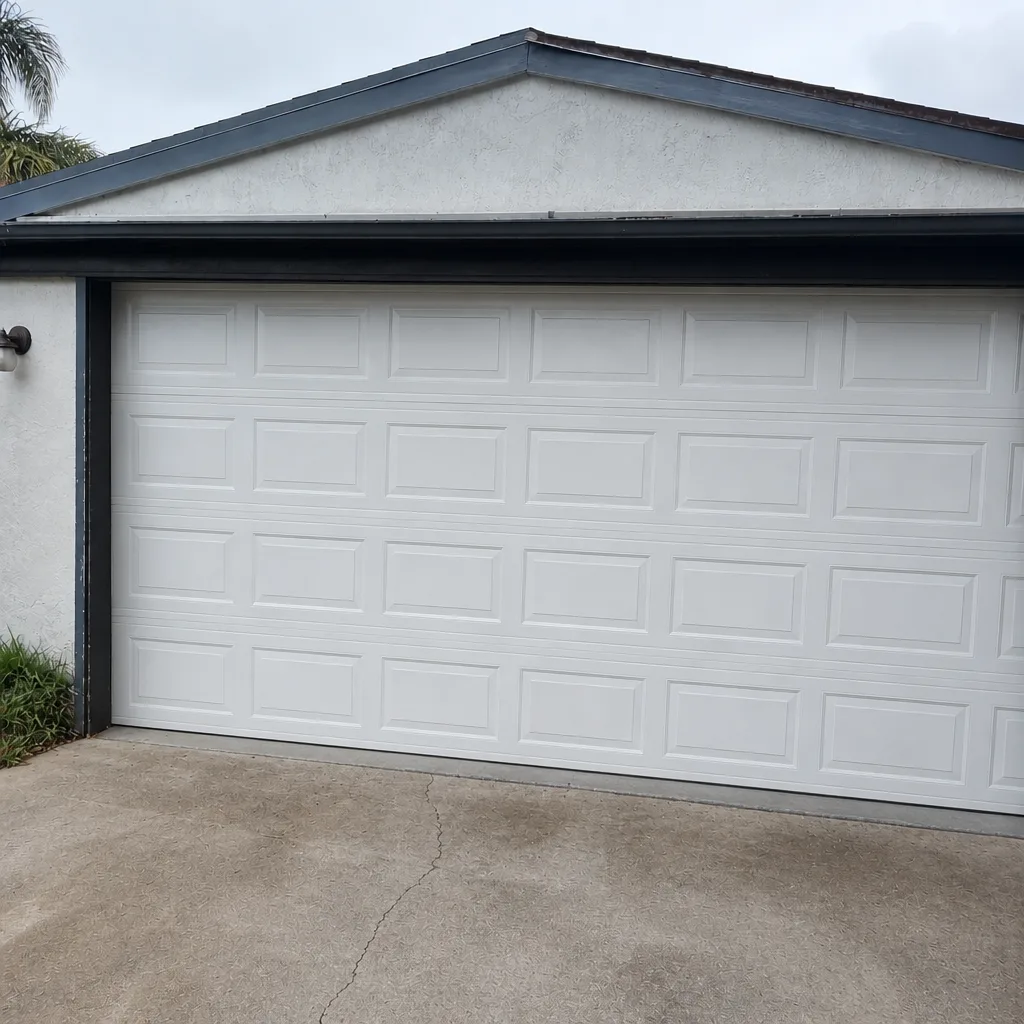
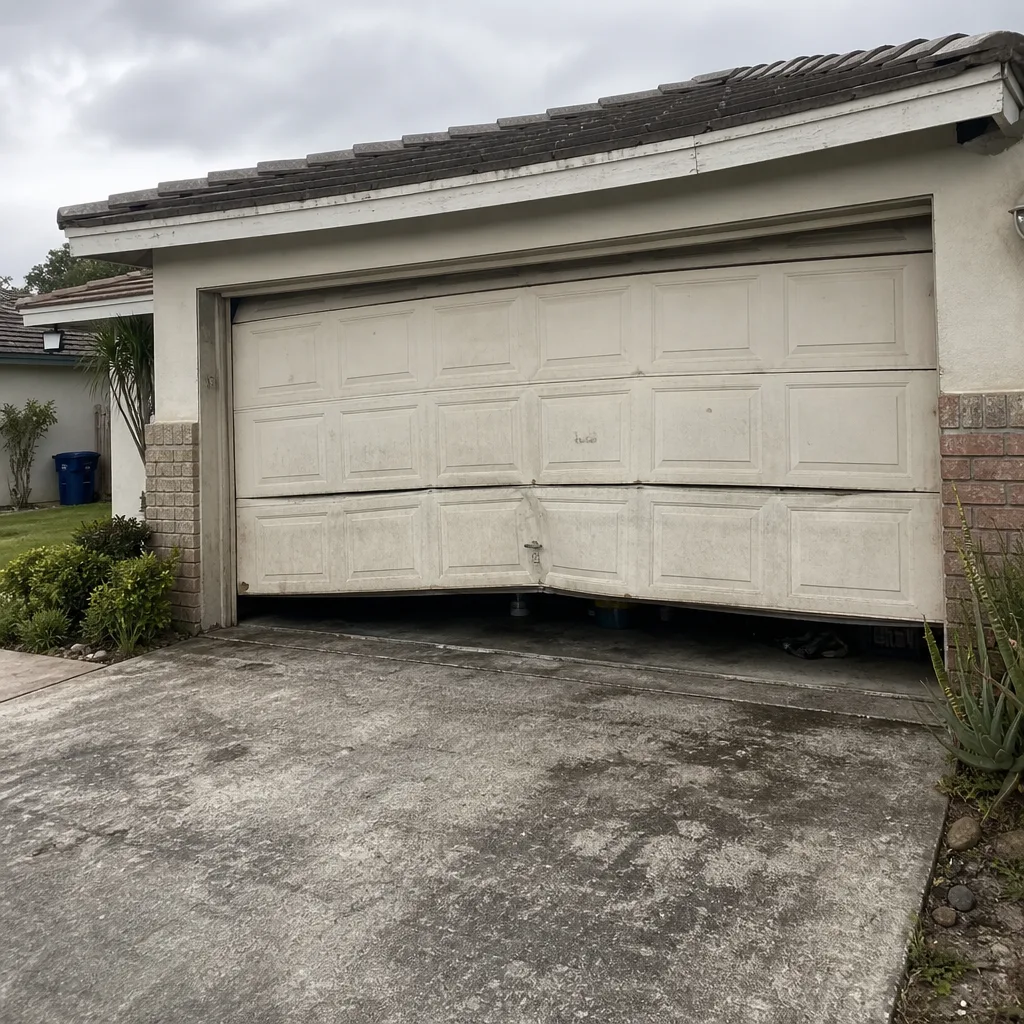
See the difference
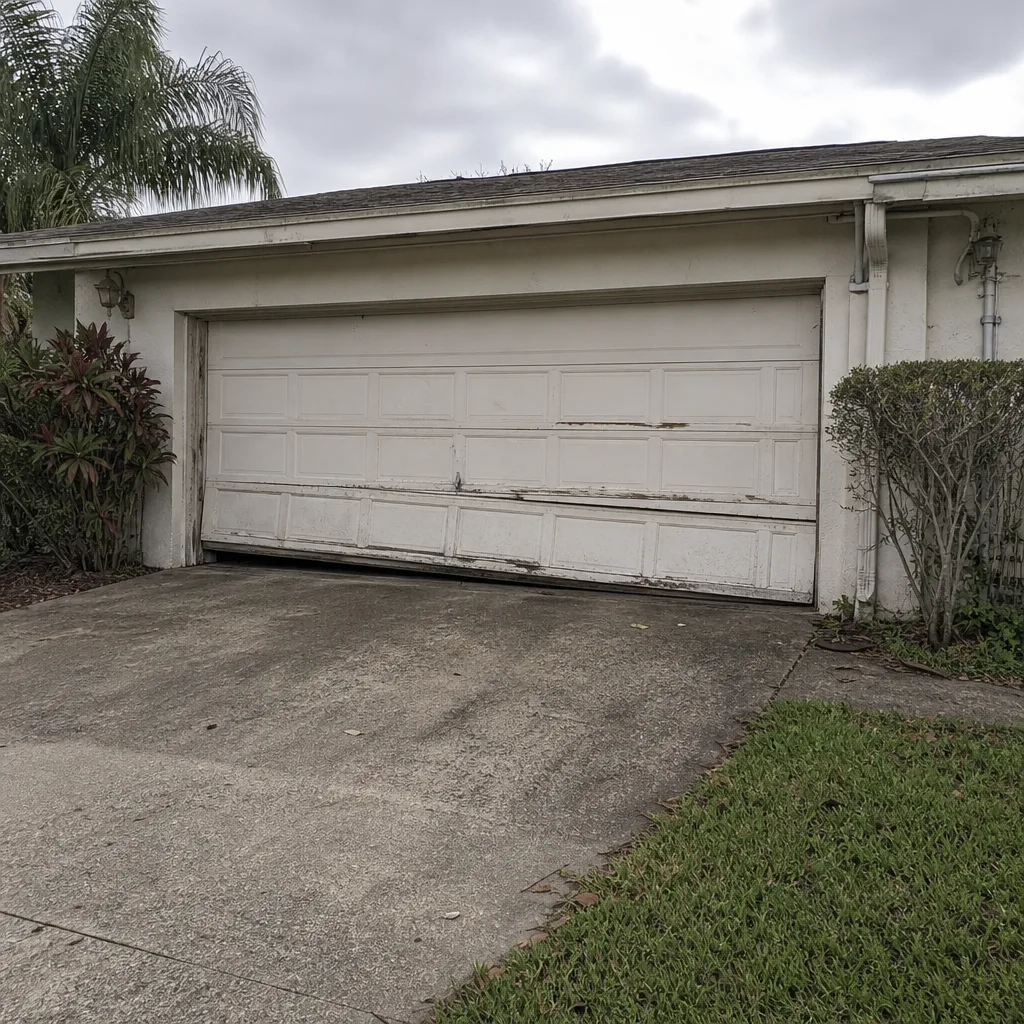 Before
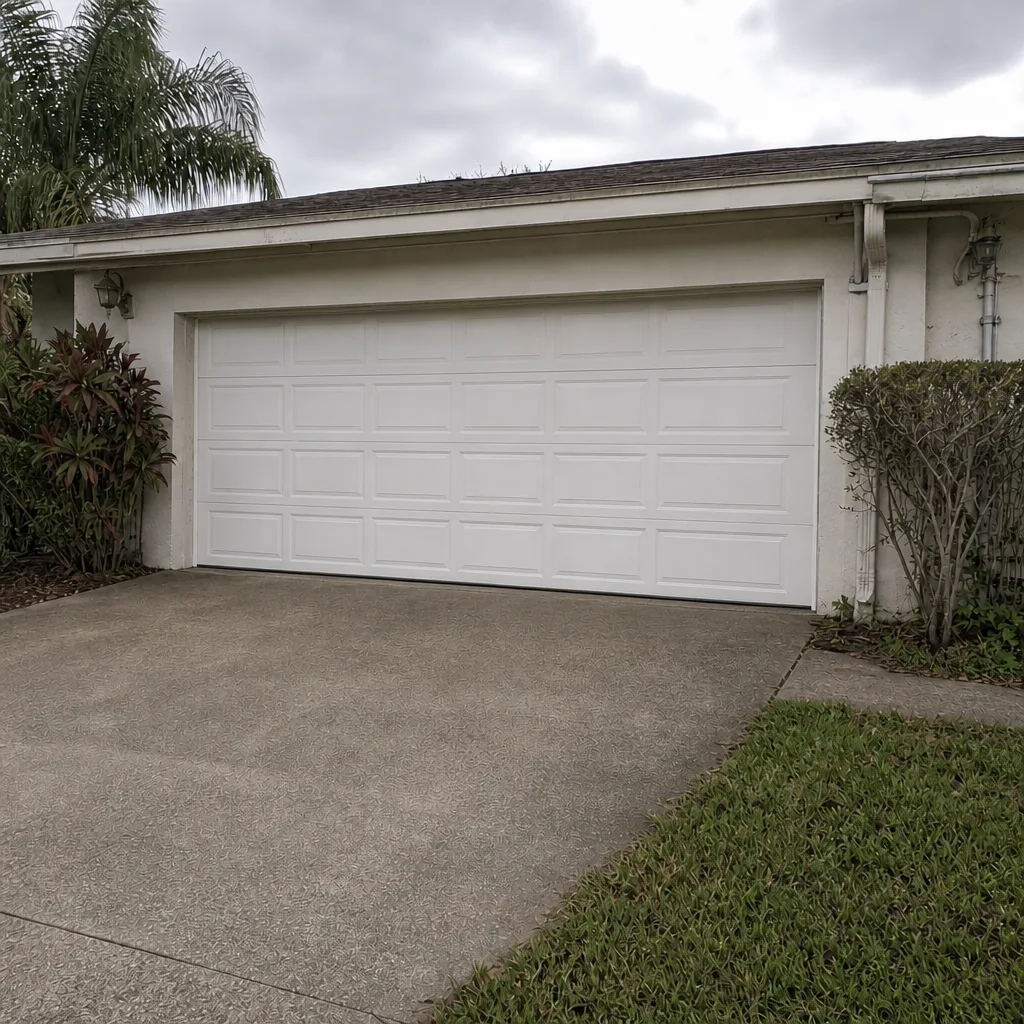 After
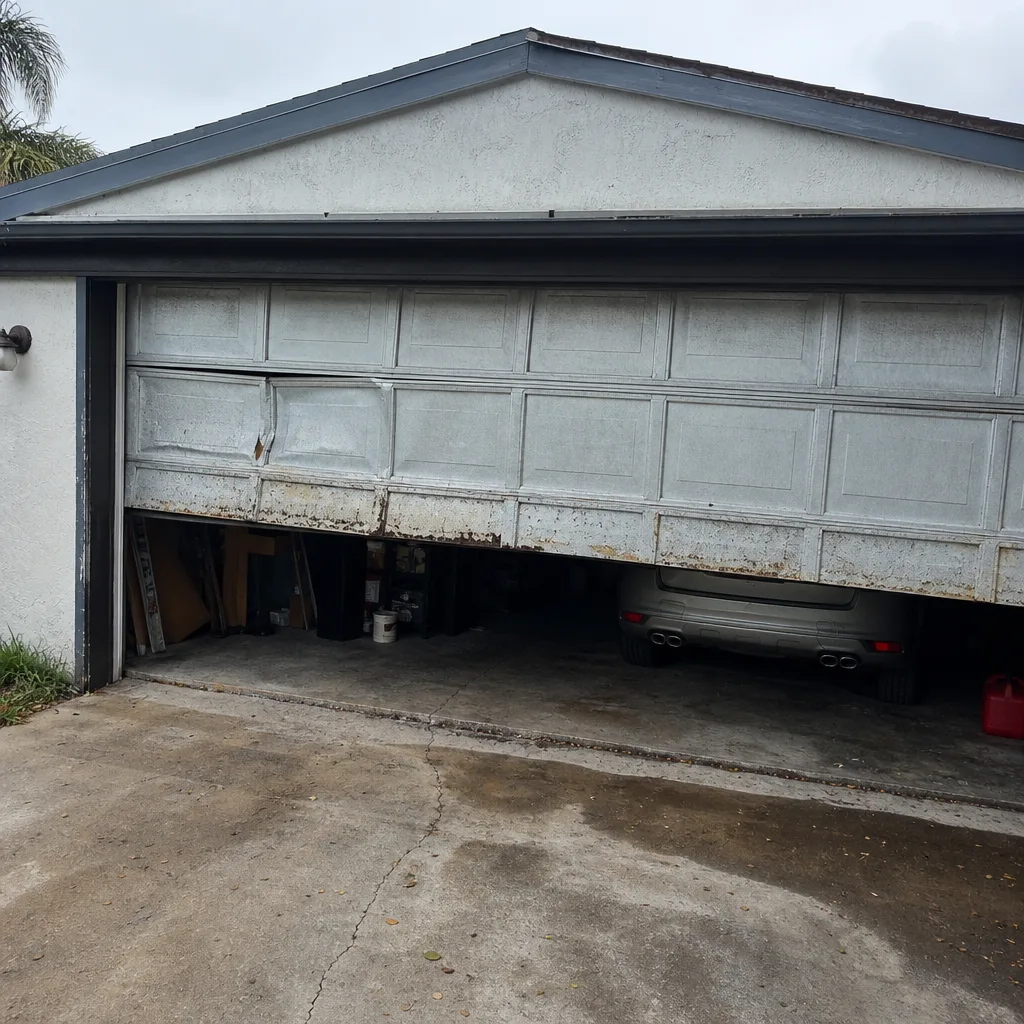 Before
 After
 Before
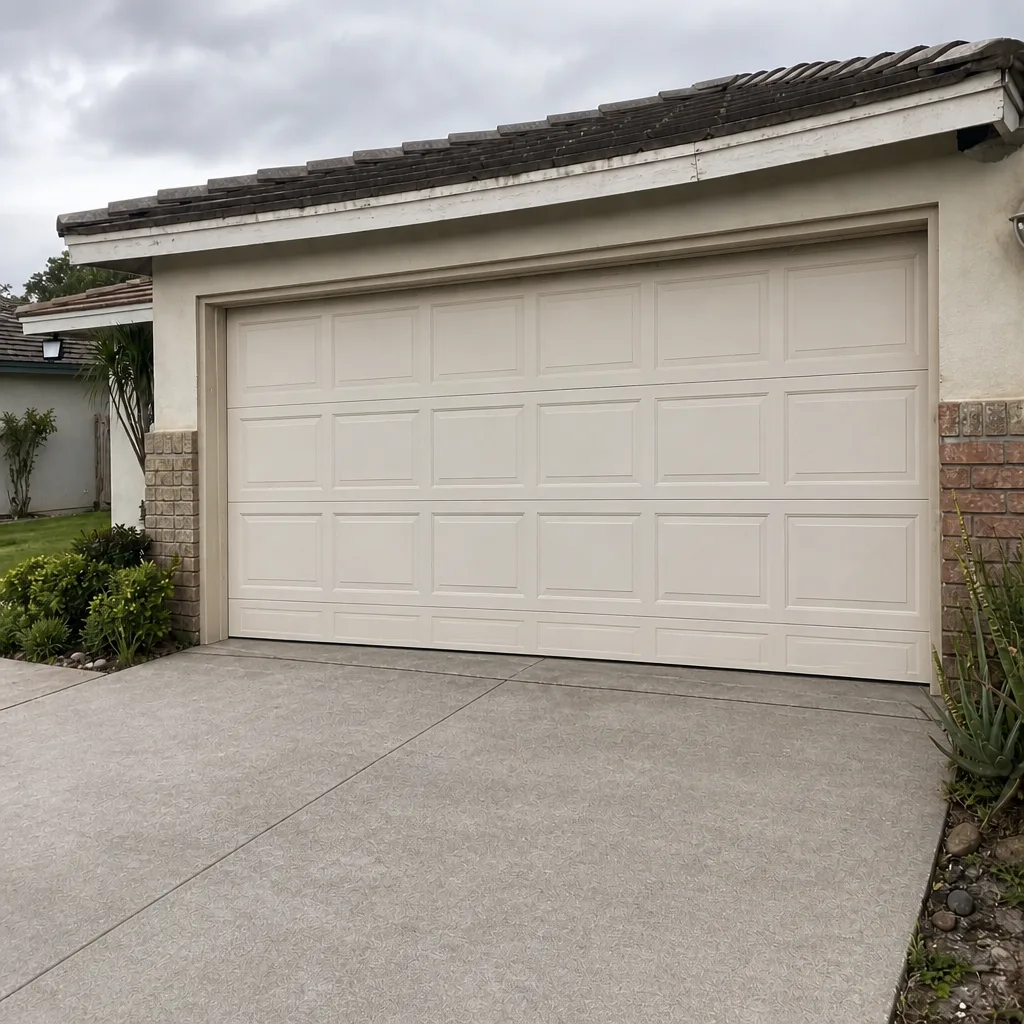 After
When to Call a Professional
Call us when the door won’t move at all, when you hear a loud snap from the spring area, when the door hangs crooked or comes off the tracks, or when the opener runs but the door doesn’t respond. Call when you see a broken spring, a frayed cable, or a bracket that’s pulled away from the wall. Call after a named storm if anything looks off, and call before June 1 if you haven’t had a professional inspection in over a year. For everything from a LiftMaster opener issue to a full door replacement, Sunrise Garage Door Repair Pros offers free estimates in Sunrise. Call (855) 658-4060 and we’ll get you on the schedule.
Frequently Asked Questions
Once a year professionally, with monthly lubrication and testing in between. South Florida’s heat and humidity wear moving parts faster than a dry climate, so the monthly routine matters more here than it does up north.
No. Springs are under extreme tension, and a release can cause serious injury. Spring replacement is a job for a trained technician, and it’s the one task on this checklist we’d never recommend a homeowner take on.
Complete a pre-hurricane inspection by June 1: tighten brackets and lag bolts, check springs and cables visually, test the auto-reverse, clear and lubricate tracks, and document the door’s condition with photos. Book a professional tune-up in April or May before schedules fill.
Inspect tracks, brackets, springs, cables, and panels from the ground before operating the door. If anything looks bent, loose, or damaged, don’t operate it and call for service. Storm debris in the tracks should be cleared before the first operation.
The price we agree on before any work starts is the price you pay. If we find additional issues during the job, we’ll explain what we found and quote the additional work before proceeding, and you decide whether to go ahead.
The local professionals we connect you with are licensed and insured as their state requires. If you have questions about credentials for a specific job, ask when you call.
The Bottom Line
Your garage door doesn’t fail because of one bad storm. It fails because a bracket, a spring, or a roller was already on its way out and the storm was the last straw. A Sunrise-specific maintenance routine protects your door by focusing on the two windows that matter here, hurricane prep in late spring and post-storm recovery in fall, rather than the four-season schedule written for colder climates. Lubricate monthly with the right product, test the safety features quarterly, inspect and document before June 1, and inspect again before you operate the door after a storm. Handle the tasks that are safe and leave the springs to a trained technician. That’s the whole system. For a professional inspection or any repair you need, call Sunrise Garage Door Repair Pros at (855) 658-4060 for a free estimate.
Written by the team at Sunrise Garage Door Repair Pros.